Math
Hard to believe today is the first day of March. Feels like February flew by. Here’s hoping the next 63 days of school fly by too. I’m definitely in spring fever mode and ready for summer! Since it is March, I’m linking up with Farley for March Currently. Be sure to link up with Farley at her blog Oh’ Boy 4th Grade.
One of the standards in 2nd grade specifically 2.NBT.3 is that students are able to read and write numbers to 1,000. Now, this seems like a large task and can also seem a bit monotonous. I didn’t want it to become that way for my kiddos so I came up with a challenge for them. The challenge is they have to take their blank hundreds charts and write the numbers from 1 to 1,000. Then, when they are finished they get to turn it into a book with a cover that they get to decorate and take home to share with their families. I know this doesn’t sound overly exciting to us since we’re adults – but the kids ate it up! The other thing I did is limited the time we spent on it each day. If we spent a half hour on it every day the kids would get bored and it would never get finished. Two to three days a week after we’ve cleaned up math stations we have about 4-5 minutes until we start math. During that time students can work on their counting to 1,000. Funny enough they even ask to work on it when they have finished their math work early. Below are a few pictures of my student’s book – he was the first one to finish…
Happy Counting!
We spent 2 full weeks working on adding and subtracting double digit numbers with borrowing and regrouping. This is definitely a tough one. Having never taught this in first grade, this was definitely a learning experience for me and for them. But, on a happy note, my kids aren’t freaked out by it. I used my CGI (Cognitively Guided Instruction) training from my previous district, we worked on strategies to make it concrete and they’re getting it!
The three strategies we’re focusing on are….
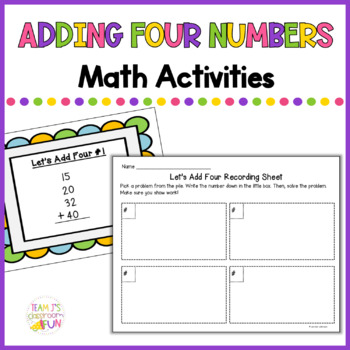
Anyways, for some of activities that I used with my class – I have created a TPT item in my store – Adding 4 Numbers Activities. Check it out here…
I’ve been meaning to post about this standard and post this freebie for a few weeks, but life got in the way. So, better late than never…
A few weeks ago we worked on comparing 3 digit numbers – specifically standard 2.NBT.4. The kiddos did really well with this standard so we only needed a quick few days of practice and they were good to go. Below are some ideas and pictures from our work…
Here’s our anchor chart we created with vocab, symbols, and a few examples. I love creating these math anchor charts and adding to them throughout the lessons. I find the kids referencing them at later times and love that they are referring to them and using them!
And, here’s a little game I created for students to also practice comparing 3 digit numbers. This game can be found as a freebie in my TPT store…here.
Here are a few pictures from the kids playing…
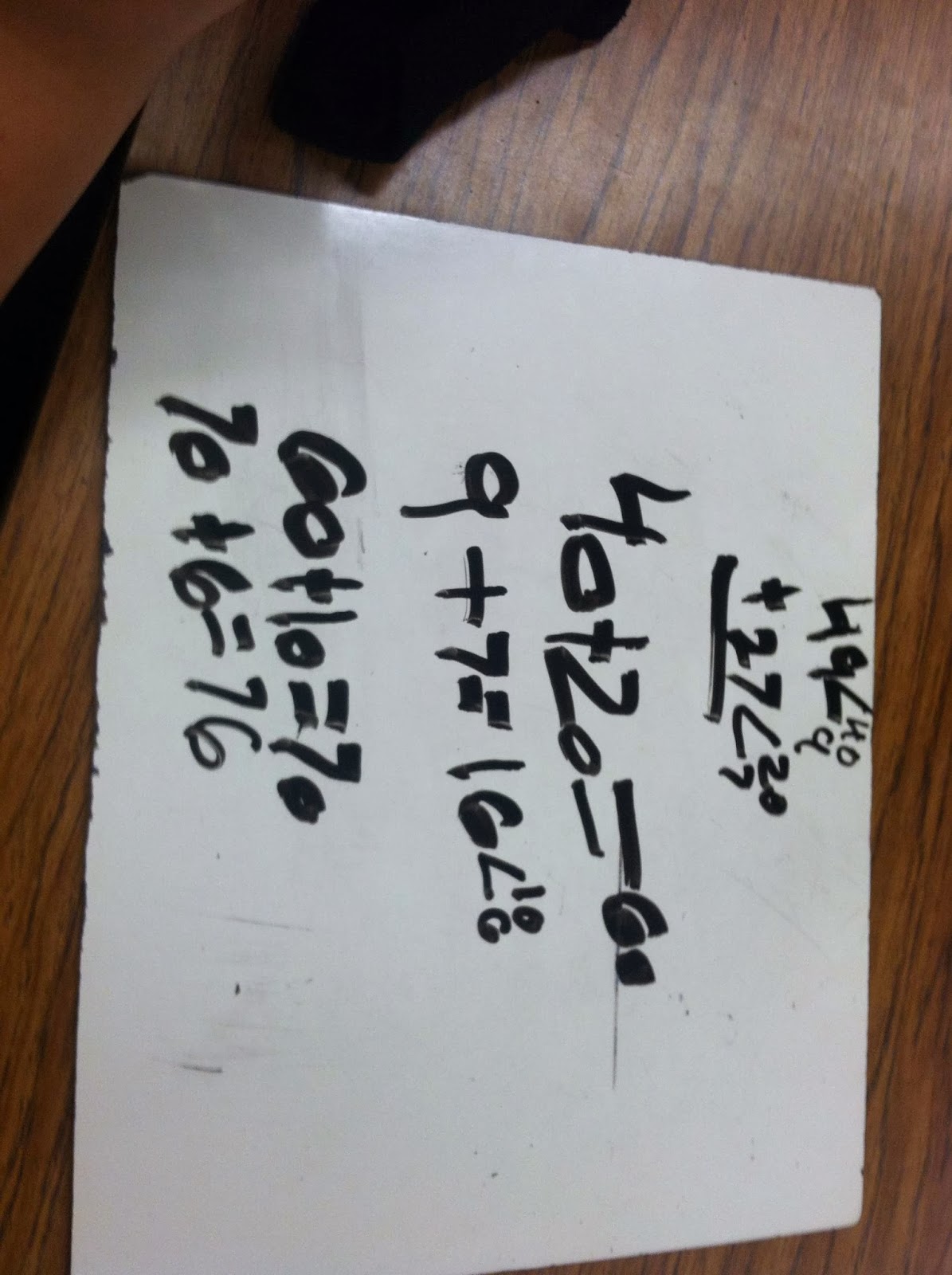
My kiddos had struggled a lot with double digit addition and subtraction. Some had learned the straight algorithm, but had no idea what they were doing or why they were doing it, and some were trying to draw 44 circles and 23 circles and then count them all up one by one. So…I decided we needed some strategies. We started with straightforward double digit addition and subtraction – no borrowing, no regrouping. We worked on 3 strategies. One each day as to not overwhelm students. After exposing them to each strategy and letting them practice each one, they got to choose the strategy that worked best for them. We worked on place value, empty number line, and break apart. After we went over these, they really started to get the hang of it and problems weren’t taking 8 hours to solve like the drawing 44 and 23 circles :-).
Here are two anchor charts we made to document our strategies.
Well I had this great post about everything we did the first week back and then the internet went down, it didn’t save, and I lost it. I was so frustrated the other day that I’m not posting some of those neat activities until now. I will do better with my resolution about blogging, but it’ll take a bit to get back into things after the craziness of trying to get back into school mode.
Last week we worked on the Geometry standard – 2.G.2 – where students have to partition/divide rectangles into smaller shapes.
The kids loved the introductory lesson. I got a packet from The Common Core Creations on TPT called 2.G.2 Activity Pack. I highly recommend her packet. On the first day of teaching this standard we did the first lesson called “Cover Up.” Students had a large size rectangle and square and had to cover it up. Now, the fun part of this and the part all the kids love and will remember is we didn’t use tiles, we used Cheeze-It’s like the packet suggested. Anytime you give the kids food to work with engagement always seems to occur. Here are a few pictures of this activity…
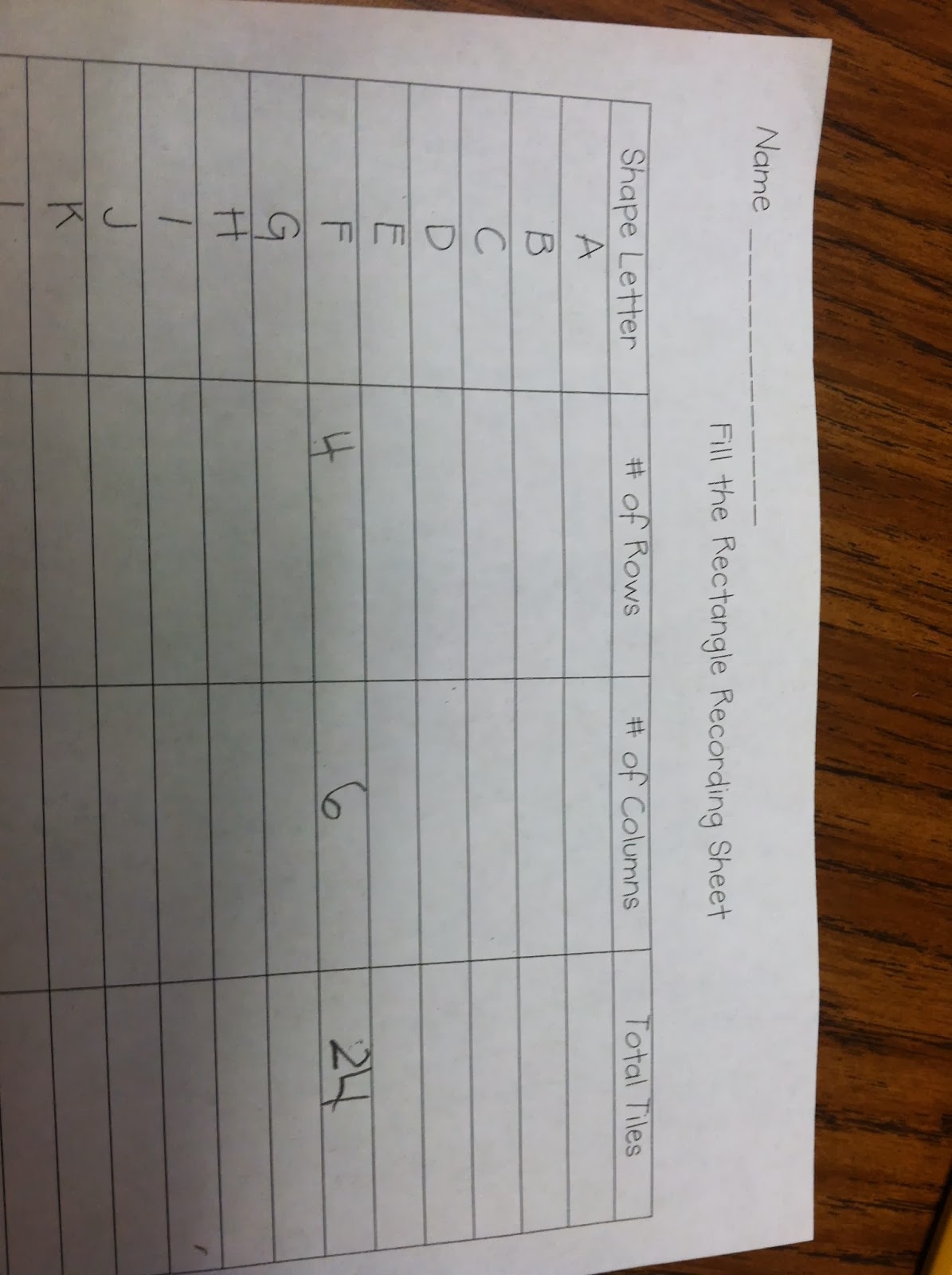
Then, later in the week, we did another great activity. I got this activity from K-5 Teaching Resources (a great website with lots of math lesson ideas and games). There were 25 different rectangles/squares and I labeled each with a different letter for tracking purposes. Then, I made my own recording sheet where students could record their results. Students then picked a rectangle and filled it with tiles. After filling it, they wrote down the number of rows, columns, and how many tiles total filled their shape. They had a great time with this activity!
Skip Counting Activities and Stations
Anchor Charts, Common Core, Math, Math Stations, TPT November 25, 2013We’ve spent the past week in my second grade class working on 2.NBT.2. They are doing a great job skip counting and below are the activities and stations we did to practice.
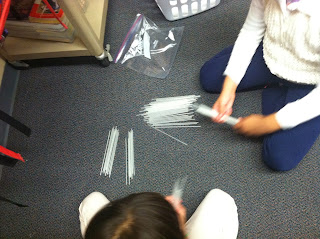
To introduce skip counting, we spent time with counting collections. I used pom pom balls, snap cubes, unifix cubes, highlighters, popsicle sticks, straws, etc. Each item had a different number and was given to the partnership on purpose – to help with differentiation. Higher kids had numbers in the hundreds – lower kids had numbers in the 40s-80s. The first direction was just to count and tell me how many the had. I stopped them about halfway through and we talked about how they were counting. Most weren’t organizing the items and most were counting by ones, so we discussed was this a good way or is there a better strategy? I had two groups who had already figured out a strategy. One group was counting by 10s and another by 20s. So, we tried this with an example and decided skip counting was easier and it was easier if you grouped them. We went back to the counting collections and now counted while putting them into groups of 2’s, 5’s. and 10’s.
Next, we worked on a skip counting chart to help us. We colored all of the numbers that were by 2’s yellow, circled all of the numbers by 5’s in orange, and underlined the 10’s in green. The kids did a great job with this and then had a resource to use throughout the week (especially with the Skip Counting Task Cards (more info on this below)).
Station #4 – Skip Counting Puzzles. The kids loved putting these together. I found some cute Home on the Range ones in Haley O’Connor’s store here.