Browsing Category

Math

Math Rotations FAQ: Answers to the Most Common Teacher Questions

Math
Math rotations blog header

Math rotations have been a game changer for my math instruction, and I have been using this structure in my classroom for about 10 years. Using math rotations makes it possible for me to provide small group math instruction and differentiate learning for all of my students every day.

That being said, math rotations do require planning, clear expectations, and strong classroom management. But once the routines are established, the benefits far outweigh the work it takes to get started!

What is the breakdown of your math block?

My math block is typically 60–70 minutes long.

I start each block with a 5–10 minute mini-lesson where I introduce the skill through a solve and share, discuss strategies, and review the rotations for the day.

The next 40–50 minutes are spent in math rotations. My rotations include:

The final 5–10 minutes are used for closing. This is when we share strategies, discuss student thinking, and reflect on what we noticed during the lesson.
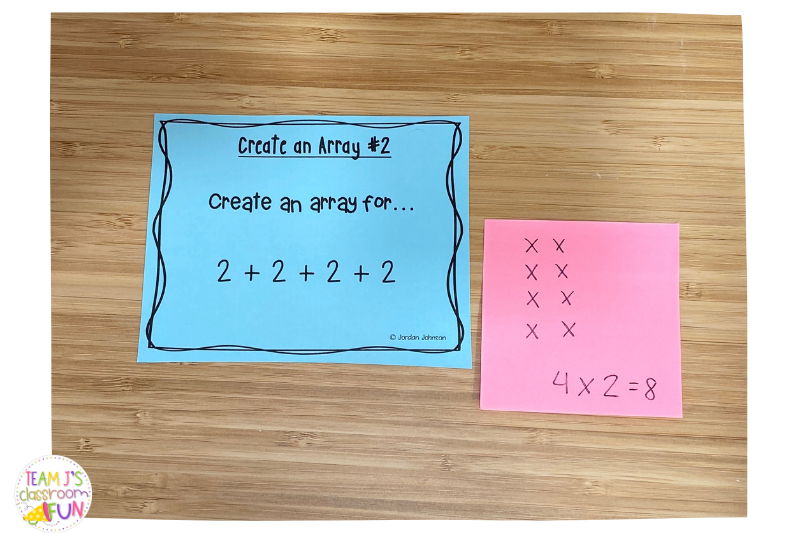
math activity

Do you have to plan four different groups each day?

Technically, yes, I plan for four different groups each day. However, all groups are working on the same math standard or skill.

For example, if we are working on finding area using unit squares, every group is practicing area—but the numbers, questions, and level of support are adjusted based on each group’s needs.

This is where the power of math rotations comes in! Instead of every student completing the exact same assignment, I can provide the right level of challenge and support for each group.
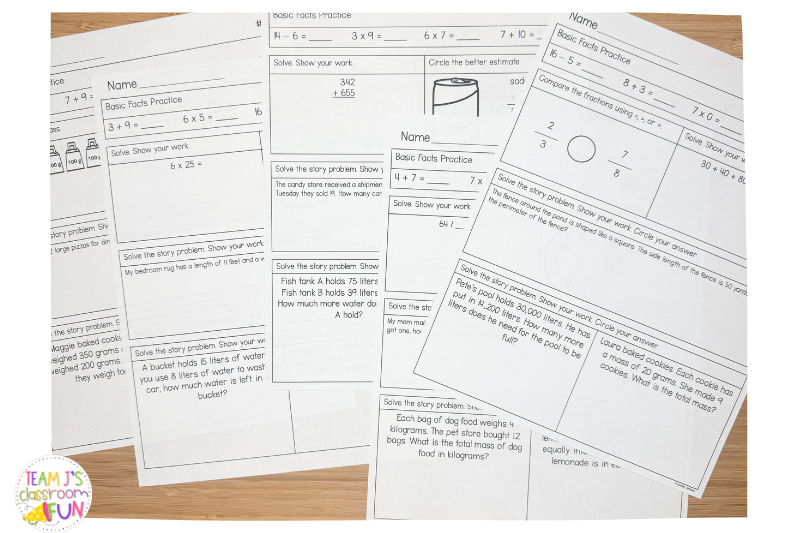
Math seat work

How do you separate your math groups?

I create my groups using a combination of:

  • Pre-tests
  • Benchmark assessments
  • Formative assessments
  • Observation during lessons

My groups are always flexible. I frequently move students during a unit if I notice they need additional support or are ready for more of a challenge.

The goal is not to create permanent groups—it is to create groups that help students get what they need at that moment.
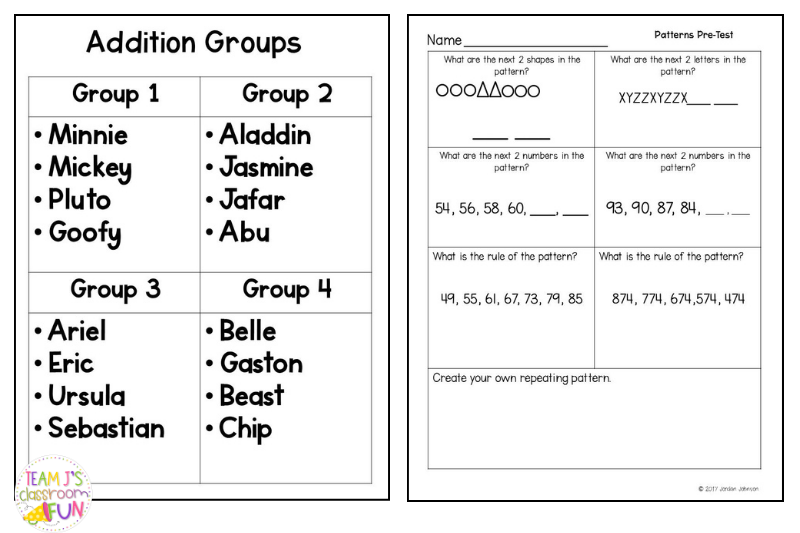
Math rotations groups and pre-test

How do students know where to go and what they are doing at each rotation?

A big part of successful math rotations is making sure students always know where they are going and what they are supposed to be doing.

I use a math rotation management board displayed on our classroom TV. Each rotation is clearly listed along with partnerships and the activity students are completing.

Teacher Time and Seat Work are typically guided by an adult, so those stations do not require as much information. Students can easily see what they are doing during Tech Time and which game or activity they are completing during Game Time.

Students always rotate clockwise and follow the same rotation order each day. Keeping the routine consistent helps students become independent and confident with the process.
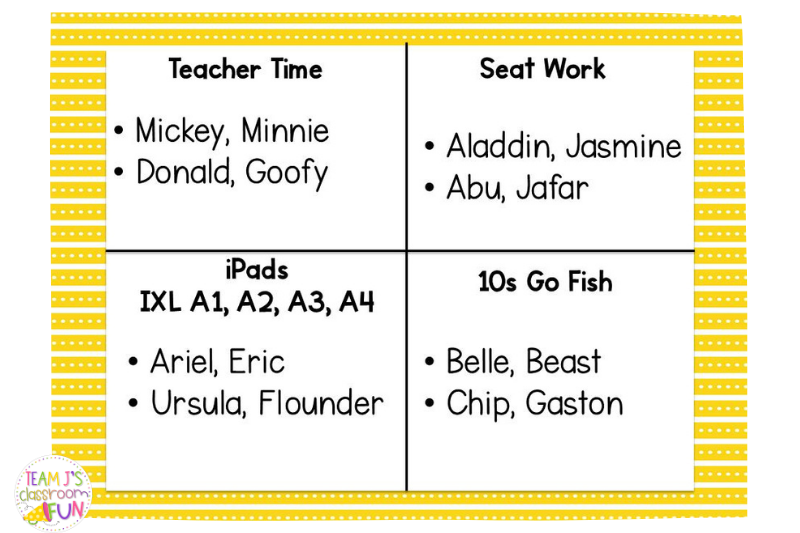
Math rotation board

Where do you find math games and activities?

There are so many places to find math games and activities!

Many math curriculums include games that can be reused throughout the year as spiral review. I also find great activities on Teachers Pay Teachers and through other teacher-created resources.

The key is finding activities that allow students to practice important skills while staying engaged.

You can read more about my favorite places to find math games and activities in this blog post HERE.
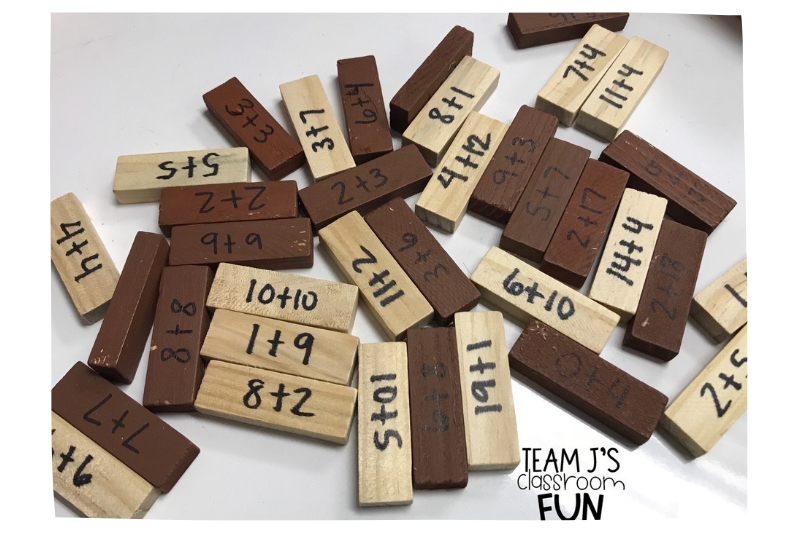
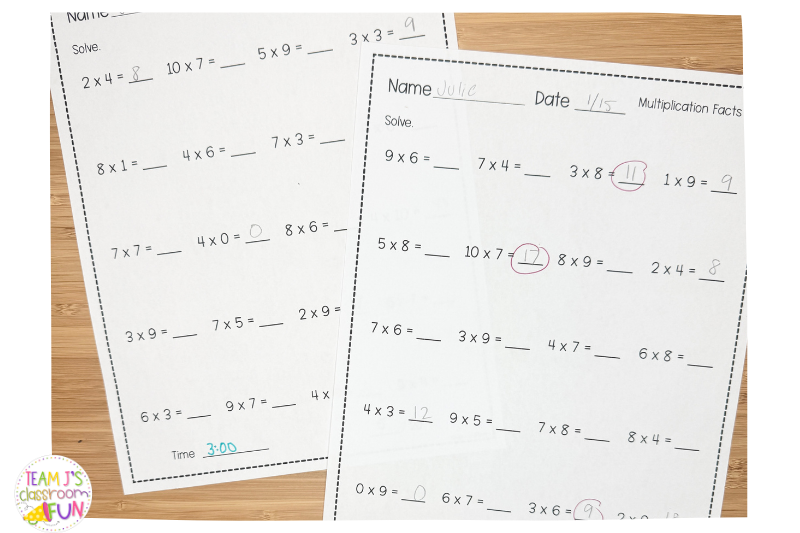
math fact games

How do you make sure students are actually working when you are pulling a small group?

This is one of the biggest concerns teachers have when starting math rotations—and it is completely understandable!

Strong expectations and routines are what make math rotations successful. During the first week or two, I do not immediately start pulling small groups. Instead, I focus on teaching students how the rotations work.

We start with two rotations, then move to three, and eventually add all four. During this time, I spend a lot of time monitoring, reteaching expectations, praising students who are following routines, and making sure everyone understands what they should be doing.

Once students are ready, I begin pulling small groups.

Students know that their work matters. They are expected to complete and turn in assignments, and I check their work regularly. If students choose not to stay on task, they are responsible for finishing their work during another time.

Even after rotations are established, I continue to circulate and provide reminders when needed. Building independence takes time, but the payoff is students who can confidently work while I provide targeted small group instruction.
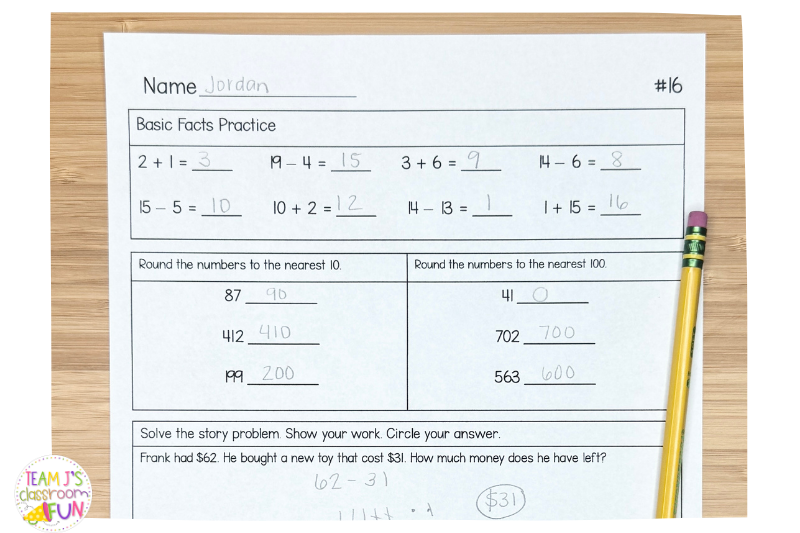
Math seat work

Math Rotations FREEBIE

Math planning page

Math Rotations can seem a little overwhelming at first especially when you are trying to differentiated to meet the needs of all of your students. To help make this easier, I’ve created this digital or printable planning sheet that you can use to plan out your whole rotation for the day – standards, mini-lesson, rotation activities, and differentiated small group activities. This is a FREEBIE that you can sign up for HERE. Happy math planning!

Want more info…

Math Rotations Round-Up Blog

Math Rotations Seat Work for 3rd Grade Bundle

Math Rotations Videos on YouTube
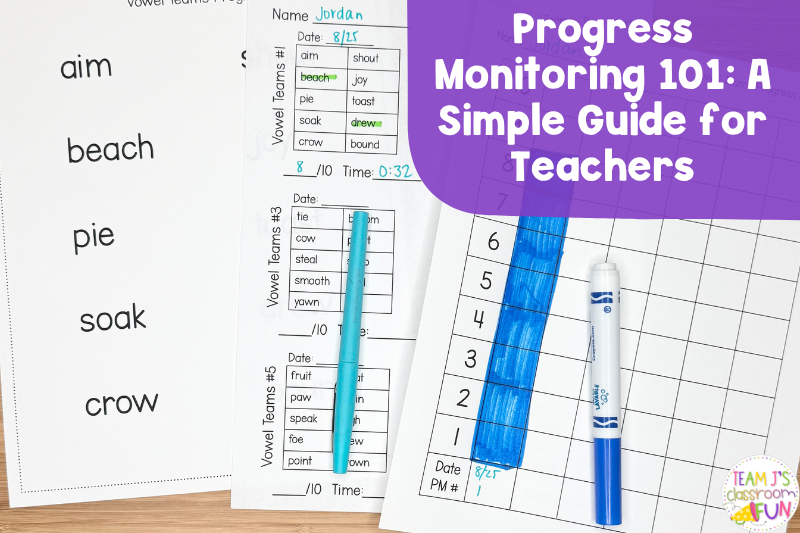
Progress Monitoring 101: A Simple Guide for Teachers

Math, Reading
Blog header for progress monitoring 101

Teachers often hear the words progress monitoring and immediately groan.

We know it matters, but it can feel like one more thing to add to an already full plate—and it’s not always as straightforward as it sounds.

But while progress monitoring does take consistency, it’s one of the most valuable tools for understanding whether interventions are actually helping students grow.

If progress monitoring has ever felt overwhelming—or if you’re just looking for a simple overview—this guide is for you.

What Is Progress Monitoring?

Think of progress monitoring as your teacher GPS.

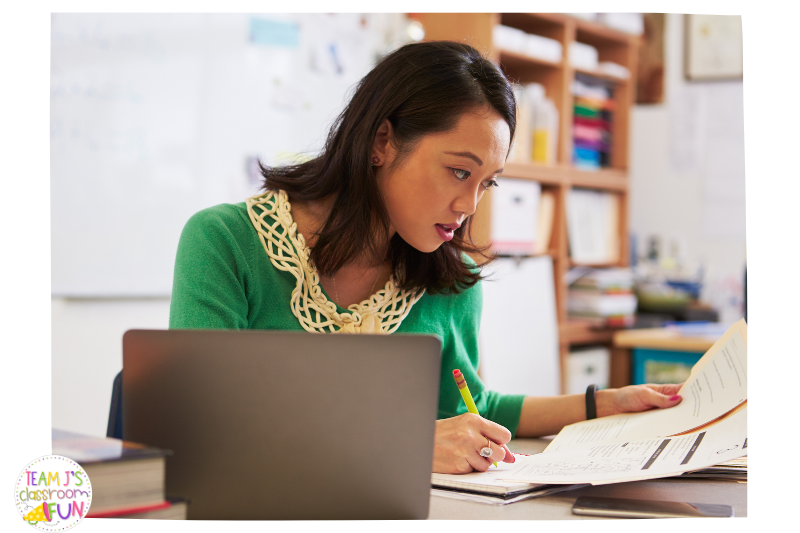
teacher grading papers

It helps guide instruction by showing whether students are making progress and whether your interventions are working—or need to be adjusted.

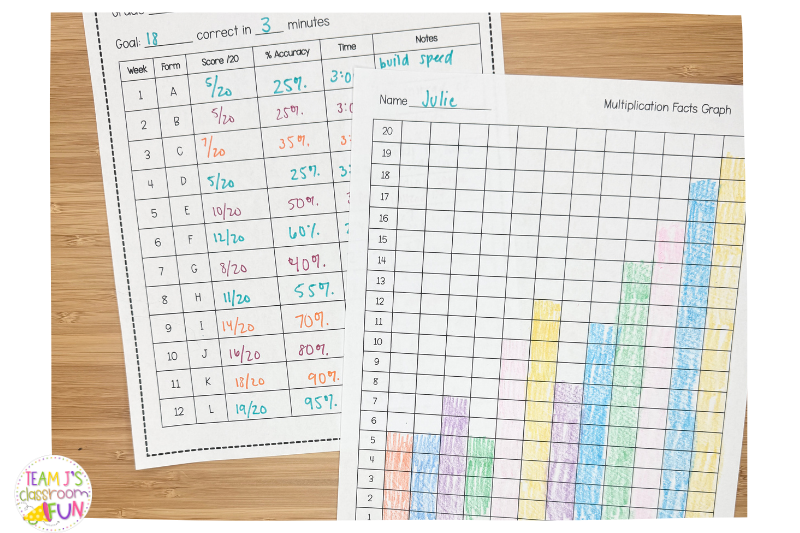
Progress monitoring should be completed consistently, typically at least once per week (and sometimes twice weekly depending on the skill).

The key is that progress monitoring should directly match the intervention.

For example:

  • If a student is receiving intervention for decoding words with digraphs, monitor digraph decoding.
  • If a student is practicing multiplication facts, monitor multiplication facts.

Consistency matters, too. Keep the format of the assessment the same so the data reflects growth in the skill, not changes in the assessment itself.


Why Does Progress Monitoring Feel Overwhelming?

If teachers know progress monitoring is important, why does it feel so hard?

One reason is that there can simply be too much data.

When we collect endless data points, it becomes difficult to analyze what’s actually happening and decide whether instruction is working.

Sometimes progress monitoring tools are also overly complicated, making it harder to quickly identify student needs.

And often, the biggest challenge isn’t collecting the data—it’s knowing what to do with it afterward.

You have the numbers… now what?

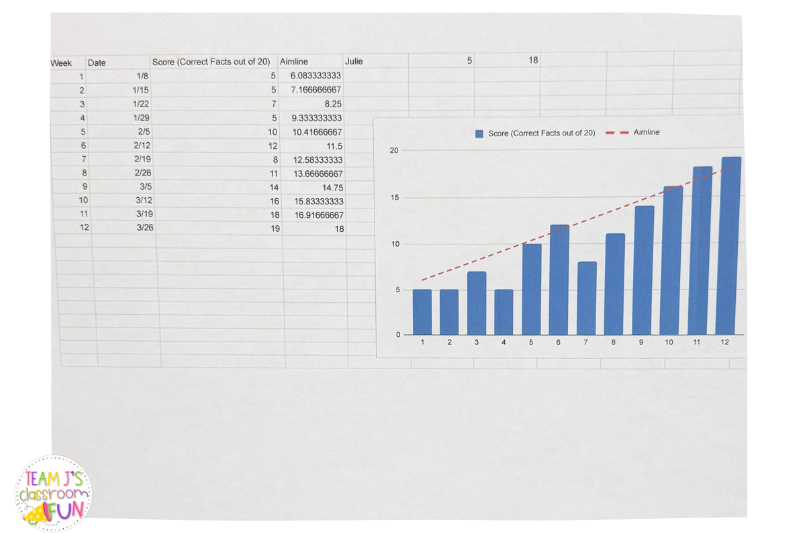
progress monitoring digital data

3 Ways to Make Progress Monitoring Less Overwhelming

1. Keep your system simple

Use assessments and tracking tools that are easy to administer and easy to analyze.

2. Build consistent routines

Collect data weekly so you always have an updated picture of student growth.

3. Plan for instructional next steps

Before collecting data, decide how you’ll respond to different outcomes so the data leads to action.

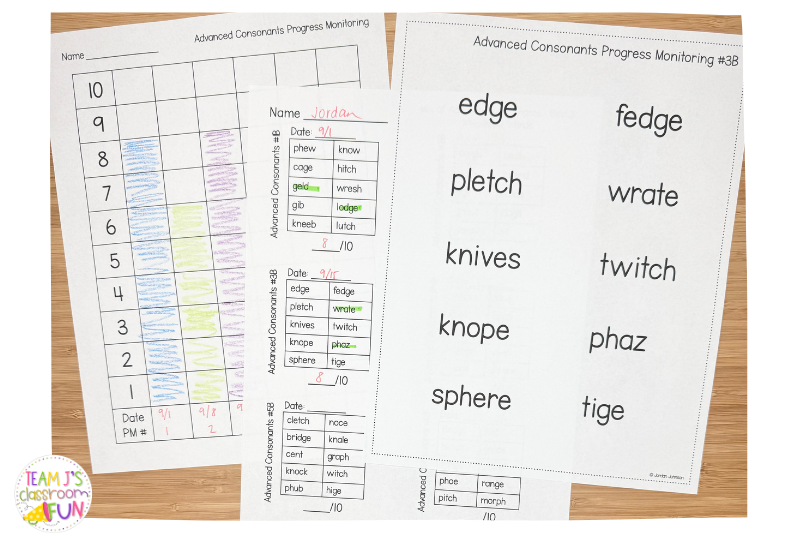
phonics monitoring

Why I Use Skill-Based Progress Monitoring

One of the systems that has made tracking student progress easier in my classroom is skill-based progress monitoring.

Skill-based monitoring focuses on one targeted skill at a time and aligns directly with the intervention students are receiving.

For example, if students are working on 2-digit addition with regrouping, both instruction and progress monitoring focus on that exact skill.

Other examples include:

  • Specific phonics patterns
  • High-frequency words
  • Reading fluency
  • Multiplication facts
  • Addition and subtraction facts
  • Place value
  • Elapsed time

This approach makes it easier to:

✔️ Group students based on similar errors or misconceptions
✔️ Identify what instruction students actually need
✔️ Track growth over time
✔️ Decide when students need more support—or are ready to move on

Because the data is targeted, it becomes easier to answer an important question:

Is the student making progress, staying flat, or needing additional support?

students completing progress monitoring

What Should You Do With the Data?

The goal of progress monitoring isn’t collecting data—it’s using it to make instructional decisions.

The data should help answer:

  • Is this intervention working?
  • Does this student need additional support?
  • Should I increase frequency?
  • Does my strategy need to change?

Avoid making quick changes after one difficult week.

Instead, look for patterns over time.

If a student shows limited growth across 3–4 weeks of consistent data, that may signal a need to adjust instruction, increase intervention time, or try a different approach.

On the other hand, progress monitoring can also show when students have made enough growth to exit an intervention and move to a new goal.


Grab FREE Progress Monitoring Samples

Want to try progress monitoring with your students?

Choose the free sample that fits your current needs:

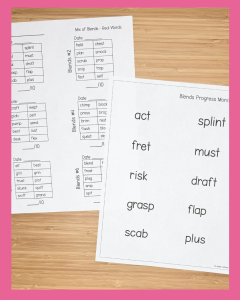
→ Consonant Blends Progress Monitoring FREEBIE
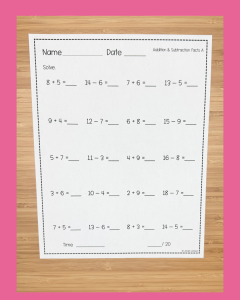
→ Addition & Subtraction Facts Within 20 FREEBIE
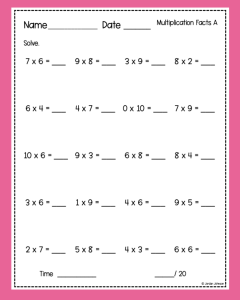
→ Multiplication Facts FREEBIE

Looking for more support?

multiplication progress monitoring

→ Phonics Progress Monitoring Mega Bundle
→ Phonics Progress Monitoring Real Word Bundle
→ Full Multiplication Facts Progress Monitoring Collection
→ Full Addition and Subtraction Facts within 20 Progress Monitoring Collection

More Info on Progress Monitoring and Intervention

The Simple Math Rotations Schedule That Actually Works in a Real Classroom

Math, Math Stations

Teachers often hear about math rotations and think, I’d love to try that… but how?

Math rotations can feel overwhelming. You have to plan multiple rotations, manage behavior, and somehow find time to prep everything. It’s easy to feel like it’s just too much.

But it doesn’t have to be that hard. Today I’m sharing the simple math rotations schedule I’ve used in my 2nd and 3rd grade classrooms for the last 15 years.

Math rotations blog intro image

Why Math Rotations Don’t Work (At First)

I’ve seen the same situations over and over:

  • Teachers try math rotations once → it feels chaotic → they give up
  • Too many activities are planned → students get confused → behavior increases
  • There’s no consistent structure → students don’t know where to go or what to do
  • Rotations are too short or too long → students either rush or lose focus

The problem usually isn’t math rotations. It’s that the schedule is too complicated to maintain.


My Simple and Realistic Math Rotation Schedule

The biggest reason this works is consistency. I use the same 4 rotations every day so students always know what to expect.

Rotation 1: Teacher Time

Students come to the small-group table to work on the skill of the day.

Everyone is learning the same skill, but this is where I can differentiate the most and support struggling students.

Photo of small group activity during math rotations for line plots

Rotation 2: Seat Work

Students independently practice the skill of the day while also completing problems that include spiral review.

This keeps skills fresh without needing extra lessons or extra planning.

Photo of seat work

Rotation 3: Math Game

Students play a partner or small-group game.

I don’t introduce new games every day. Instead, I rotate through a few games we already know how to play. This saves planning time and keeps behavior problems low because students already know what to do.


Rotation 4: Tech Time

Students use their computers to practice math skills.

Because this rotation stays the same, students know how to log in, what to do, and how to complete the activity. The predictability makes a huge difference.


What This Looks Like in a 60-Minute Math Block

photo of management board

Here’s the timing I use in my classroom:

  • Mini-lesson → 5 minutes
  • Explain rotations → 3 minutes
  • Rotation 1 → 10–12 minutes
  • Rotation 2 → 10–12 minutes
  • Rotation 3 → 10–12 minutes
  • Rotation 4 → 10–12 minutes
  • Closing/share time → 5 minutes

The key is balance. Too short and students can’t get started. Too long and they lose focus.


Why This Schedule Works

This routine works because it’s predictable and easy to maintain.

Students know:

  • where to go
  • what to do
  • how long they have
  • what happens next

For me, it makes planning much easier because I’m not creating something new every day. I’m just plugging in a new math skill into the same routine.


How to Start Without Feeling Overwhelmed

If math rotations feel intimidating, start small.

  • Start with 2 rotations for a few days
  • Then move to 3 rotations
  • Finally move to 4 rotations

At the beginning, don’t pull small groups yet. Use that time to walk around, reinforce expectations, and make sure students understand the routine. After a few days, you’ll be able to confidently pull groups because students will know exactly what to do.


Want Help Planning Your Rotations?

I created a free Math Rotation Planning Page to make getting started easier.

free math rotations planning template

It helps you:

  • plan each rotation
  • map out your lesson from start to finish
  • plan how you’ll differentiate during teacher time

Click here to grab the free planning page and make math rotations easier to start this week.

More Math Rotations Info:

Watch My YouTube Series About How to Start Math Rotations

Shop 3rd Grade Math Rotations Seat Work

Read Math Rotations Round-Up

How to Make Elapsed Time Click: Strategies + Differentiated Printables for 3rd Grade

Math

Elapsed time has always been one of the trickiest math skills to teach — and if you’ve ever had students stare blankly at a clock during a word problem, you’re not alone. Part of the challenge is that kids just don’t interact with clocks the way we used to. With digital clocks everywhere, many students have little experience reading an analog clock, let alone using one to calculate elapsed time. On top of that, students often come in at very different levels — some need tons of repetition, while others are ready to be stretched. In this post, you’ll find simple, effective strategies (and ready-to-use printables!) to help all your learners build confidence with elapsed time — without the stress.

Blog header for elapsed time post

1. Teach Time Conceptually First

Before students can master elapsed time, they need a solid conceptual understanding of how time works. Two of my favorite strategies for building that foundation are:

  • 🟦 Empty number lines – Great for visually mapping the passage of time in chunks.
  • 🟦 T-charts – Help students break down hours and minutes separately to see how time accumulates.
Photo of t-chart elapsed time strategy

Using manipulatives like mini clocks can also make a big difference. Some students need to physically move the hands to really understand how time changes. This hands-on approach makes abstract concepts more concrete.

📌 Want a deeper look at the T-chart or empty number line strategy? Click HERE for more info.

2. Use Real-Life Scenarios for Practice

Elapsed time word problems are more effective when students can see themselves in the problem. Instead of generic examples, try this:

  • 🏀 If Lucas loves basketball, create a problem like: “Basketball practice started at 4:15 PM and ended at 5:30 PM. How long did it last?”
  • 🎮 If Avery loves video games: “Avery played his favorite game starting at 6:10 PM and played for 45 minutes. What time did he stop?”

When the story connects to their interests, students are more engaged—and the math feels more meaningful.

Photo of elapsed time worksheet

3. Differentiate Practice with Tiered Worksheets

One of the biggest challenges with elapsed time? Your students are likely all over the place in terms of readiness. That’s why I created a set of differentiated worksheets with three levels:

  • ✔️ Level 1: Beginning learners
  • ✔️ Level 2: Intermediate
  • ✔️ Level 3: Advanced
Photo of elapsed time worksheets - 3 levels

Each version uses the same types of problems but with scaffolded numbers and complexity, so you can easily match students to what they need. And best of all — they’re no-prep. Just print and go.

🧡 This resource saves you time while making sure every student gets exactly what they need.

4. Incorporate Elapsed Time into Math Rotations

Math rotations are a perfect opportunity to build in varied, differentiated practice. Here’s how I use them:

  • ⏱️ Teacher Table: Solve elapsed time problems together on whiteboards, with discussion and modeling.
  • 🎯 Task Cards Around the Room: Great for independent practice or partner work.
  • 🎲 Math Games: Simple matching games or time puzzles can reinforce skills without feeling like “work.”

By rotating through different formats, students stay engaged and get multiple exposures to key concepts.

Photo of elapsed time task cards

5. Build in Repetition Without Burnout

Elapsed time isn’t a “one and done” skill — it takes lots of practice to master. But doing the same activity over and over leads to boredom fast. To keep things fresh:

  • 🔁 Mix it up: use worksheets one day, task cards the next, and group problem-solving on whiteboards another day.
  • 📏 Add movement: post problems around the room or let students write their answers on sticky notes and place them on a timeline.
  • ✍🏽 Keep it interactive: use small group whiteboards or vertical surfaces to encourage discussion and strategy sharing.
Photo of empty number line strategy

💡 The more you vary the format, the more engaged your students will be — and the more practice they’ll get without even realizing it.

Elapsed Time Practice Done For You

Photo of differentiated elapsed time worksheets

I created these Elapsed Time Word Problem Worksheets because I needed something I could use right away—no prep, no sorting by level, and no extra work at the copier. With three differentiated versions of each printable, I can quickly assign the right level to each student and know that they’re all working on the same skill at just the right challenge point.

Whether you’re running math centers, assigning independent work, or reviewing in small groups, these worksheets make it easy to target each student’s needs without creating three separate lesson plans.

Grab the Elapsed Time FREEBIE

Want to take the stress out of planning for elapsed time?
🎉 Grab a free sample of my differentiated worksheets HERE and try them with your students this week.


Or, if you’re ready to go all in, you can grab the full set here and get everything you need for easy, effective elapsed time practice—leveled, printable, and classroom-tested.

Looking for more practice??

Grab my Elapsed Time Theme Task Cards Bundle

How I Use Math Seat Work to Make 3rd Grade Math Routines Easy and Effective

Math

Math seat work didn’t start as a strategy—it started as a solution. I was watching my students struggle through workbook pages filled with confusing directions and way too many problems. The overwhelm was real, and I knew they weren’t getting the targeted practice they needed. I wanted something they could do independently—without tears or frustration—but that still built fluency, confidence, and real math skills. That’s when I created my own daily math seat work—and it completely changed how I structure math time in my classroom.

Photo of blog header of a teacher giving a student a high five

What is Math Seat Work

Photo of math seat work pages

Math seat work is the independent practice portion of our daily math rotations. In my classroom, students rotate through four stations each day: teacher time, seat work, games, and tech. After learning and practicing a new skill during teacher time, students move on to seat work—where they apply what they’ve just learned on their own. This independent work gives them a chance to build confidence and fluency, and it gives me valuable insight into how well they’re grasping each concept.

When Do I Use Math Seat Work

I use math seat work daily during the independent practice portion of our math block. Since my students rotate through four math stations, they complete their seat work right after teacher time—giving them an immediate opportunity to practice the skill we just worked on in small groups. Seat work is short and focused, usually taking just 10–12 minutes to complete. That’s the perfect amount of time for one page of targeted, standards-based practice.

Photo of students working with cubes

You could also use the math practice pages outside of rotations. It works great as morning work or a daily bell ringer to help students ease into the school day with meaningful math practice. Some teachers even use it as homework, since the pages are designed to be truly independent—making it easy for students to complete without parent help or reteaching.

How I Use Math Seat Work During Math Rotations

Photo of math seat work with folder and stapler

At the start of each week, I print the seat work pages and staple them into a 5-day packet for each student. The pages are designed to follow a natural progression—building on the week’s target skill while also weaving in spiral review of previously taught concepts. During the seat work rotation, students complete one page per day independently.

Afterward, I check their work and provide quick feedback. Depending on time, students either make corrections the same day or the next morning during our intervention block. This system helps me see who has a strong grasp on the current concepts and who might need additional support. It also allows me to adjust my small group instruction and create flexible groups based on real-time data—so I can meet students right where they are and guide them toward mastery.

Why Spiral Review is So Important

I used to feel like I had to constantly re-teach skills that we had already covered. Once I started using seat work that spiraled standards all year long, that changed.

Students retain skills better when they revisit them regularly—and I can catch misconceptions before they become habits. My math seat work pages include everything from multiplication and division to place value, fractions, and word problems. We’re constantly cycling back through the essentials.

photo of student working on math on white board

How I Differentiate Math Seat Work

For students who need extra support, I differentiate their seat work by highlighting only the problems they are responsible for that day. I make sure to include the most important new content along with one or two review problems, so they’re still practicing both current and foundational skills. By reducing the number of problems, students feel more confident and are less likely to become overwhelmed—while still getting meaningful, targeted practice.

The Resource I Use Every Day

photo of seat work with math manipulatives

I created my Year-Long 3rd Grade Math Seat Work because I couldn’t find exactly what I needed. I wanted something that offered:

✅ Daily spiral review across all major 3rd grade math standards
✅ Print-and-go pages with no extra prep
✅ A consistent structure students could navigate independently
✅ A mix of computation, word problems, and review—aligned to the standards

It quickly became a cornerstone of my math block. The best part? I never have to scramble for daily practice—it’s already prepped and ready to go.

If you’re looking for an easy, effective way to build math fluency and reinforce key skills all year long, this resource is ready for you!
👉 Grab an individual 30-day set or save 20% with the full 180-day bundle using the links below.

Want to try it out?

Photo of free week sample of math seat work

I’ve put together a free week sample so you can see how I use it and try it with your students!
Click HERE to try it out!

For more information on Math Rotations, check out the info below…

Math Rotations Round-Up

Math Rotations YouTube Series

Counting Coins Made Easy: Teaching Kids How to Count Coins

Math
Blog header for counting coins post

Counting coins…do you hear those two words teachers and just dread the upcoming math unit?? I’ll be honest – I used to raise my hand on this one too! Counting coins is a tricky skill and one that students often struggle with, but it doesn’t have to be that way.

Let’s first get into why counting coins seems to be trickier in this day and age.  Let’s be real – no one really uses coins anymore.  We all have debit cards and credit cards and Venmo.  People and parents are often not carrying around cash and coins for students to see real life money experiences.  Since we are not using these in our everyday lives – kids aren’t exposed to coins like they used to be.  I honestly think this is a large reason why coin identification and counting coins has become a harder skill to teach over the years. But – it still is an important math skill, life skill, and one that is in many math standards.

My goal today is for you to walk away from this blog post with a few fun new ways you can make teaching counting coins engaging for you and most importantly – your students.  Check out my ideas below…

Coin Sort Activity

Child sorting coins

A foundational element in teaching coin counting is ensuring students are able to accurately identify the coins. If students cannot distinguish between different coins, the counting process becomes much more difficult.

To solve this problem, I use a variety of coin sorting activities. Students are presented with a mixed collection of coins and instructed to categorize them based on their type. This practice serves to reinforce visual recognition, facilitate the differentiation of coin characteristics, and provide an opportunity to discuss the value of each coin. 

Skip Counting

Child counting

Skip counting is a wonderful skill to help students with counting coins. I do a lot of whole group skip counting as we get into our coin unit so they can see the relationship between skip counting and counting coins.  There are also a number of skip counting songs online that you can use too.

Break the Bank – Online Math Game for Counting Coins

Break the bank coin counting game

ABCya has a fun game called Break the Bank. In this game, students get to break open the piggy bank and then sort the various coins. They also have an option for students to count the money. This can be a great addition to a technology rotation or practice time.

Counting Coins Practice (Color Coded)

Construction paper coin practice - q (quarter), d (dime), and n (nickel)

This coin small group activity came about last year when my students were having difficulty with counting mixed coins. It was hard for them to switch the number they were skip counting by.

So to work on this I used four different colors of construction paper and put the starting coin letter on them (for example – dimes said “D” and  were on orange paper). Then, I’d have students come up and give them a paper to hold. (For example, two dimes, a nickel, and 3 pennies) We’d put them in order – putting liked coins together – from largest value to smallest. Then we would work together to skip count as a group and find the total amount.

Ways to Make

Ways to make activity

To challenge students and promote critical thinking, I love to have them come up with as many ways as they can to create a certain amount. For example, ten cents – could be ten pennies, a dime, two nickels, one nickel and five pennies. These numbers could be differentiated based on your grade level and student need. Click HERE for a set that is already made for you and ready to use!

Cupcake Tin Coins

Coin counting with cupcake liners

One of my favorite money math stations or activities is having students count out the amount to fill the cupcake liner. On each cupcake liner I write a different amount. Then students have to use the coin manipulatives to create the amount on the liner. 

I love this because you can differentiate the numbers and there isn’t necessarily one right answer. There can be many different ways to create a specific amount so this is a great open-ended activity.

Hair Trick for Counting Coins

Hair trick for counting coins

I’m not sure where I saw this, but the hair trick for counting coin has been helpful for some of my students. For this students put “hairs’ on the coins.  Each hair has a value of 5. So a quarter would get 5 hairs, a dime would get 2 hairs, and a nickel would get one hair. A penny gets a dot since its value is one. 

So when students are counting a total amount of coins, they would first put the specific hairs needed on each coin. Then they can count by 5s and then 1s for the pennies to figure out the total amount.

So, there you have it! While counting coins might initially seem like a daunting unit, it doesn’t have to be. By incorporating engaging activities like coin sorting, skip counting, tech games, color-coded practice, ‘ways to make’ challenges, cupcake tin counting, and even the ‘hair trick,’ we can transform this traditionally challenging topic into an enjoyable and effective learning experience. 

Remember, the key is to bridge the gap between our digital world and the practical skill of handling money. By making it hands-on, interactive, and fun, we can empower our students to confidently master coin counting and build essential life skills. 

3 Math Fact Games Your Students Will Love

Math
Blog header for 3 math fact games

The phrase ‘math fact practice’ often elicits groans from students. However, while practicing math facts is crucial for mathematical success, it doesn’t have to be a dreaded chore. In this blog post, I’ll share some engaging math fact games that make learning fun and interactive.

Fact fluency is an important standard in first, second, and third grade. Math facts set-up a strong foundation for higher level math skills, increases confidence, and improves math problem solving skills.

Why Fact Practice Is Important

Math fact fluency provides a strong foundation for understanding more complex mathematical concepts. When students can quickly recall basic facts (addition, subtraction, multiplication, division), they can focus their cognitive energy on problem-solving strategies, critical thinking, and applying those concepts to real-world situations. Without fluency, students may get bogged down in simple calculations, hindering their progress in algebra, geometry, and other advanced math topics.

Here are three math fact games that students can play to help them practice. These games are engaging and can be played collaboratively with a partner or group in the classroom. These math fact games can be differentiated and focus on different math skills, for example – addition, subtraction, multiplication, or division.

Math Fact Game #1 – Fact Jenga

Photo of jenga blocks for math fact games

Jenga can be a fun way to incorporate academics into playtime. This versatile game can be adapted for various subjects, including mathematics. By writing addition, subtraction, multiplication, or division facts on the Jenga blocks, you can turn a classic game into an engaging educational activity.

Creating Math Fact Jenga:

  • Materials: Jenga pieces (available at Target, Dollar Tree, etc.) and a Sharpie.
  • Instructions:
    • Select a math skill focus (e.g., addition, subtraction).
    • Write a math fact on each Jenga block.

Playing Math Fact Jenga:

  • Setup: Build a Jenga tower as usual.
  • Gameplay: Players take turns:
    • Remove one block from the tower.
    • Solve the math fact on the block.
    • If correct, place the block on top of the tower.
  • Game Over: The game ends when the tower falls.

Math Fact Game #2 – Kaboom

Photo of the game Kaboom with popsicle sticks

Kaboom is a versatile game that can be adapted to reinforce various academic skills. In my classroom, I incorporate Kaboom into our math rotations. Students practice math facts by drawing Kaboom sticks with addition, subtraction, multiplication, or division problems. To differentiate instruction, I can provide different sets of Kaboom sticks to each group based on their current learning objectives.”

Creating Kaboom Math Fact Sticks:

  • Materials: 20 popsicle sticks, colored markers, a Sharpie, and a cup.
  • Instructions:
    • Color one end of each popsicle stick to indicate the correct orientation.
    • Write “KABOOM!” on 5 sticks.
    • Write math facts (e.g., addition, subtraction) on the remaining 15 sticks.

Playing Kaboom Math Facts:

  • Setup: Place all 20 sticks in the cup with the colored ends facing up.
  • Gameplay: Players take turns drawing a stick.
    • If they draw a math fact stick, they solve the problem. If correct, they keep the stick.
    • If they draw a “KABOOM!” stick, they return all their collected sticks to the cup.
  • Winning: The player with the most sticks at the end of the game wins.

Math Fact Game #3 – Memory

Photo of memory game

Memory is a classic game that can be effectively used to reinforce math fact fluency. To differentiate instruction, I create sets of Memory cards with varying levels of difficulty based on students’ needs and grade level. For example, some sets might focus on addition within 10, while others address addition within 20. This flexibility allows me to customize the game to target specific learning objectives and provide individualized practice for each student.

Creating Math Fact Memory Cards:

  • Materials: Use index cards, cardstock, or purchase pre-made sets from my TPT store.
  • Instructions: Write the math fact on one card and the answer on another. Create 10 pairs of cards. For better visibility, use dark paper or a light-colored writing utensil.

Playing Math Fact Memory:

  • Setup: Arrange the cards face down in rows.
  • Gameplay: Players take turns flipping two cards over. If they match (fact and answer), they keep the pair. Otherwise, they flip the cards back over.
  • Winning: The player with the most matches at the end of the game wins.

In my experience, using games like these has made a significant difference in my students’ attitudes towards math. They’re more eager to practice, and I’ve seen a noticeable improvement in their math fact fluency. I encourage you to give these games a try in your classroom and see the positive impact they can have on your students!

For more info…

3 Math Morning Meeting Activities Your Students Will Love

Math, Morning Meeting
Blog header for Math Morning Meeting Activities

Morning Meeting Activities play a crucial role in setting the tone for the day ahead in elementary classrooms. They offer a valuable opportunity to reinforce academic skills, foster a sense of community, and much more.

Morning Meeting is particularly beneficial because it:

  • Begins the day positively,
  • Encourages the practice of speaking and listening skills,
  • Helps students ease into their daily routine,
  • Provides a fun and engaging start to the morning.

During these activities, students not only enjoy playing games but also have the chance to review existing academic skills or explore new ones. Personally, I find math activities particularly effective during Morning Meeting, as they allow my students to gain additional practice with various math skills and standards.

In this post, I’ll share three of my favorite Math activities that students can enjoy and benefit from during Morning Meeting.

Noggle

Photo of Noggle Board for morning meeting activities
Photo of number sentences from Noggle board

Noggle is an amazing activity that you can differentiate to meet the needs of your grade level and/or students. For this activity, students are looking at a table of numbers and they have to create as many number sentences as they can.  The trick in this activity is the numbers have to be touching. I typically have students do this activity independently and tell them they’re trying to beat their score from last time.

This can be used to create addition, subtraction, multiplication, or division sentences. The numbers can be small or large and students can even use multiple numbers. I challenge my students to create an addition sentence with multiple addends.

Digit Place

Photo of digit place game.

Digit Place is a great game to use for building number sense and place value! This game can alo be differentiated and used at different grade levels.

Here’s how you play:

  1. You make 3 columns on the white board – Guess | Digits | Place
  2. I also put up numbers 0-9 so we can cross off numbers after we eliminate them – there is a lot of strategy in this game too.
  3. You think of a secret number that the kids will have to figure out – this can be 2-digit, 3-digit, 4-digit, etc – depending on your class’s needs.
  4. Your students will guess a number. *Let’s say my secret number is 352.  They guess 201.  I will then write their guess in the guess column and write a 1 in the digits and a 0 in the place because they got one of the digits correct (2), but that digit was not in the correct place.
  5. We keep going until we get to the correct number

*This game has some strategy to it too.  I will often have students figure out if the guess all of one number it can help us quickly figure out what the 3 digits are. For example, if they guess 999 and I say 0 numbers are correct – then we know 9 isn’t one of the numbers.

Ways to Make

Photo of Ways to Make
Photo of Ways to make circle map with number sentences for morning meeting activities

Ways to Make is another math activity that can be differentiated. For this activity, students are coming up with as many ways as they can think of to make a certain number.

For example – the number 10 could be made up with 5 + 5 or 20 – 10. Students could also use place value, tallies, coins (dime, 2 nickels, 10 pennies) to represent the number.

Students can use addition, subtraction, multiplication, division, place value, money, and more to help them represent the numbers. The goal like Noggle is for them to come up with as many ways as they can!

Grab a FREE Week of Morning Meeting Activities

Photo of FREE week of Morning Meeting activity slides

Check out this FREE week of Morning Meeting Activities! Your students will be engaged and have a blast with these fun and academic activities! Click HERE for your FREEBIE.

If you are looking for more activities, check out these resources of ready-to-go activities in my TPT Store:

Morning Meeting Activities – Volume 1

Themed Morning Meeting Activities – Year-Long Bundle

Generic Morning Meeting Activities – Year-Long Bundle

I also have a few blog posts with further activity ideas…

How to Engage and Energize with Your Morning Meeting Activities

Top 3 ELA Morning Meeting Activities

4 Ways to Include Academics Into Your Morning Meeting

Morning Meeting Round-Up

How to Create Your Own Word Problems for Math Practice

Math, Story Problems
Blog header for How To Create Your Own Word Problems for Math Practice with a photo of a word problem projected on the board.

Word problems are a great way for students to practice any math skill! Story problems not only build problem solving skills, but also provide opportunities for students to use critical thinking, try out different math strategies, and practice their math communication.

Here’s the thing – you know your students better than anyone. You know the math skills they need more practice with, you know their interests, and you know their ability. Using all of those things can help guide you in creating your own story problems for your math students.

Creating problems for your students may seem like a daunting task, but there are some key things to consider to make it easier. 

Math Skills

Photo of word problem worksheet with words - Pick Your Math Skill.

Word problems are a great way to practice most math skills since it provides context to the math. Before creating problems, think of what specific skills you are wanting your students to practice. If it is start unknown, make sure your story sets up in a way that students have to solve for the first number. If you are working on subtraction, you can create problems that have to do with someone giving something away. 

Interests

Photo of kid playing baseball with words - Use Students' Interests

When I create my own word problems, I always try to tie in my students to the story. I use their names and also their interests. This helps build engagement and makes them more interested in solving the problems.  Students love to see whose name is in the problems. 

If Johnny likes baseball, I try to create a problem about him playing baseball.  If Sara loves to read books, I create a problem about her checking out books from the library. This small step of using your students’ name and interests can be a game changer when it comes to students being excited to solve story problems.

Real-Life Situations

Photo of canned food drive with words - Incorporate Real-Life Situations.

Story problems are an amazing way for students to practice solving real-world problems! Most standards actually tie that language into some of their story problem standards.  Try to tie the word problem into something you are working on in class or something the kids might have participated in during outside school time.  

For example, say your school is having a canned food drive. You could create a word problem where students know how many cans have been collected so far and then a goal number of cans to try to reach. In this problem, you could ask students to figure out how many more cans are needed to reach the goal.

Differentiation

Photo of word problem worksheet with words - Differentiate.

Another thing I take into consideration when creating word problems is differentiation. Most if not all math classrooms have students at a variety of levels with a variety of needs. When creating problems for my class I take that it into account.

By creating my own, I’m able to change up the numbers as needed to make the problems work for my students. I will often use the same problem for all groups, but tweak the numbers. This saves me time and also differentiates for my students so they are able to get the practice they need.

Modifications

Photo of student solving problem with the words - Make Modifications.

When you create your own word problems you are also able to make modifications to the problems. For example, if you have some students who are struggling with reading you could make sure to include words they are able to decode. You could also include a picture with the problem to help them with the context. 

Word Problem FREEBIES

If you are looking for some word problems that are already differentiated and created for you, check out these FREEBIES below!

Word Problems Ready-to-Go

If you’d like further practice for your students that is differentiated and can be used for homework, independent practice, or assessments, click below…

More Word Problem Info

How to Teach Graphing Skills in Engaging and Interactive Ways

Math
Blog header for Teaching Graphing skills. Includes photo of bags of Skittles and Skittles bar graph.

One of my favorite math units is to teach graphing skills. Graphing in 2nd grade focuses on being able to read and interpret bar graphs, picture graphs, and line plots. Students also need to be able to create these graphs from data collected. I love having my students practice these skills with fun and hands-on activities! Keep reading to learn more ways you can teach graphing skills to your math students…

Books to Teach Graphing Skills

Books for teaching graphing skills.

Here are a few books you can use to teach graphing skills:

Teach Graphing Skills with Objects

Photo of small erasers that could be used as a manipulative to teach graphing.

Students can create their own pictograph by using the little erasers found in the Target Dollar Spot or other math manipulatives. For some students, it helps their understanding to be able to manipulate and move the items on the graph.

Creating Class Graphs

When I first introduce graphing to my class, we create a lot of graphs together. I pose a question for the class and then we take the data from their responses to create the bar graph or pictograph (whichever we’re focusing on at the moment).  For both of these types of graphs, we talk about how they focus on categorical data. 

This can also be a great way to teach graphing skills and tie in cross-curricular topics.  For your data, you can ask students a question about something in science or social studies to tie in different subject area.

Graphing Observations

Photo of anchor chart of a bar graph with student observations. Bar graph is focused on favorite specials.

During our data analysis unit, we spend a lot of time making observations. In addition to students being able to read the graph and answer specific questions, I also like them to just make their own observations.  I will often set up a blank piece of anchor chart paper, we’ll analyze a graph, and students will just share out what they notice. This is another great way to check for understanding.

Independent Practice

Photo of Color graph that can be used for independent graphing practice.

I had a hard time finding graphing practice that had the types of questions and graphing data I was looking for, so I created some of my own. For independent practice, I have students just read and answer questions from the graph and then also use data to create their own graphs.  I also wanted to extend the activity for some students by bringing in two sets of data to make it more challenging.  If you’re looking for some graphing practice already created for you, check out my graphing resource.

Skittles Graphing 

Photo of graphing activity where students graph the bag of Skittles colors.

Students always enjoy activities that have to do with food – so why not bring food into graphing! Each year, I love to have my students graph Skittles. I put a handful of Skittles in a ziploc bag and then students have to sort the colors, create a graph, and then answer questions. This is a fun, hands-on way for them to practice.

Line Plots

Photo example of line plot practice.

Line plots always tend to be trickier for students.  Since line plots are dealing with numerical data, not categorical, they sometimes get a little tripped up.  I again create some line plots together. One question I alway start with is – How many years have you been at our school? We also go over the importance of carefully labeling the line plots so we and others can interpret it.

Students then go on to interpret line plots and create them themselves. 

Create Your Own Graph Project

Photo of Create Your Own Graph project for students to work on in a group.

At the end of our graphing unit, after we have learned about bar graphs, picture graphs, and line plots I love to have the class work on a culminating project. This project can be done individually or in a group. 

Students get to create their own survey question and then survey they class. As they are surveying, they record the results and then create the graph that matches their data (categorical – bar graph or picture graph, numerical – line plot). When they are finished, they come up with a list of observations that they’ve made from their graph and present it to the class.

FREE Line Plot Small Group Activity

Looking for FREE line plot practice? Click HERE to grab my FREE small group Line Plot activity.

For more graphing practice…

Photo of sample of graphing practice in my TPT store - Team J's Classroom Fun.

For more information about how to teach graphing skills...