
Math rotations have been a game changer for my math instruction, and I have been using this structure in my classroom for about 10 years. Using math rotations makes it possible for me to provide small group math instruction and differentiate learning for all of my students every day.
That being said, math rotations do require planning, clear expectations, and strong classroom management. But once the routines are established, the benefits far outweigh the work it takes to get started!
What is the breakdown of your math block?
My math block is typically 60–70 minutes long.
I start each block with a 5–10 minute mini-lesson where I introduce the skill through a solve and share, discuss strategies, and review the rotations for the day.
The next 40–50 minutes are spent in math rotations. My rotations include:
- Teacher Time: Small group instruction with me focused on differentiated practice
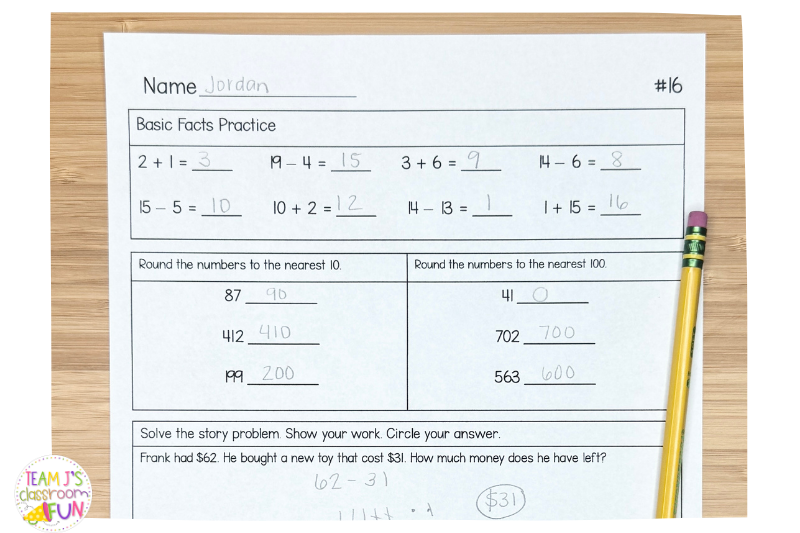
- Seat Work: Independent practice, spiral review, or skill practice
- Game/Activity: A hands-on activity or math game to practice the skill
- Tech Time: Online practice or fact fluency practice
The final 5–10 minutes are used for closing. This is when we share strategies, discuss student thinking, and reflect on what we noticed during the lesson.
Do you have to plan four different groups each day?
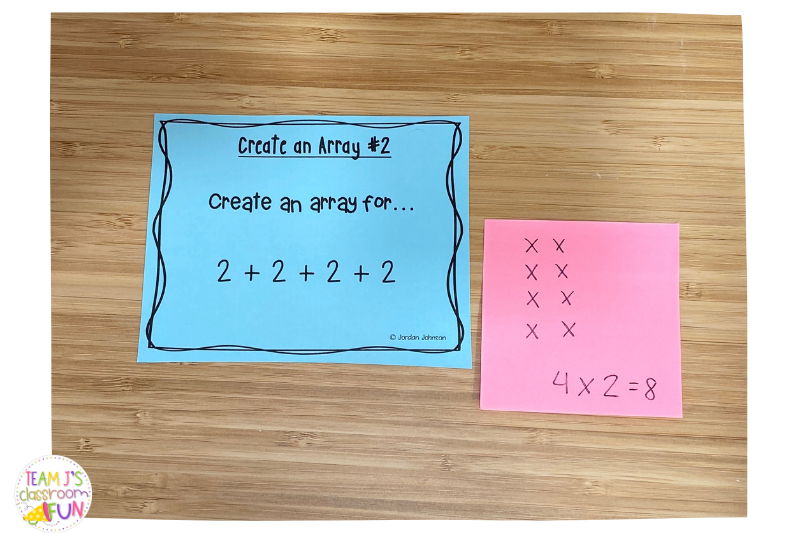
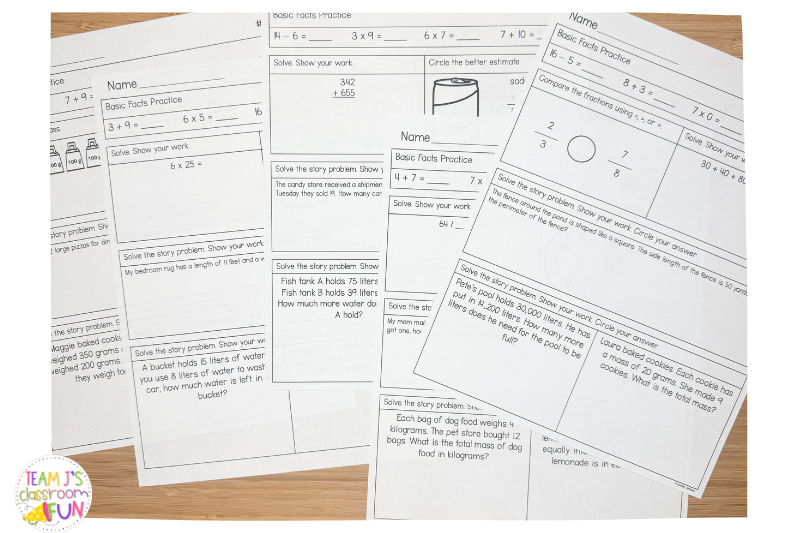
Technically, yes, I plan for four different groups each day. However, all groups are working on the same math standard or skill.
For example, if we are working on finding area using unit squares, every group is practicing area—but the numbers, questions, and level of support are adjusted based on each group’s needs.
This is where the power of math rotations comes in! Instead of every student completing the exact same assignment, I can provide the right level of challenge and support for each group.
How do you separate your math groups?
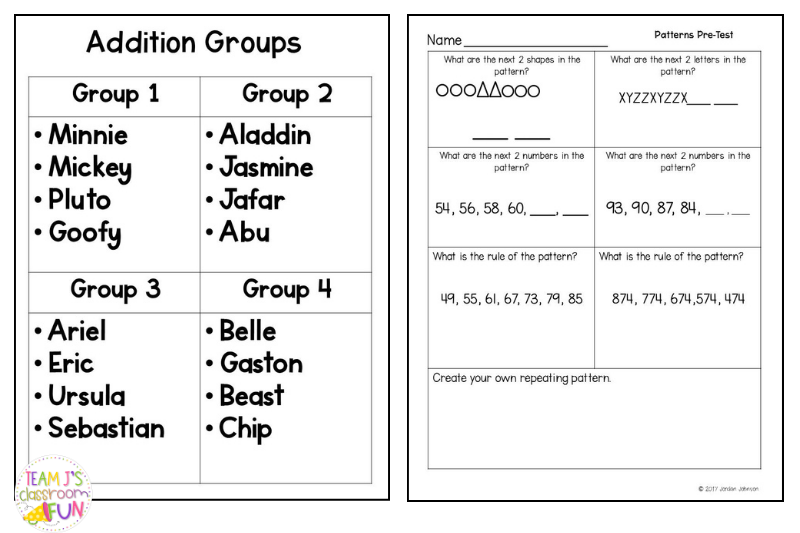
I create my groups using a combination of:
- Pre-tests
- Benchmark assessments
- Formative assessments
- Observation during lessons
My groups are always flexible. I frequently move students during a unit if I notice they need additional support or are ready for more of a challenge.
The goal is not to create permanent groups—it is to create groups that help students get what they need at that moment.
How do students know where to go and what they are doing at each rotation?
A big part of successful math rotations is making sure students always know where they are going and what they are supposed to be doing.
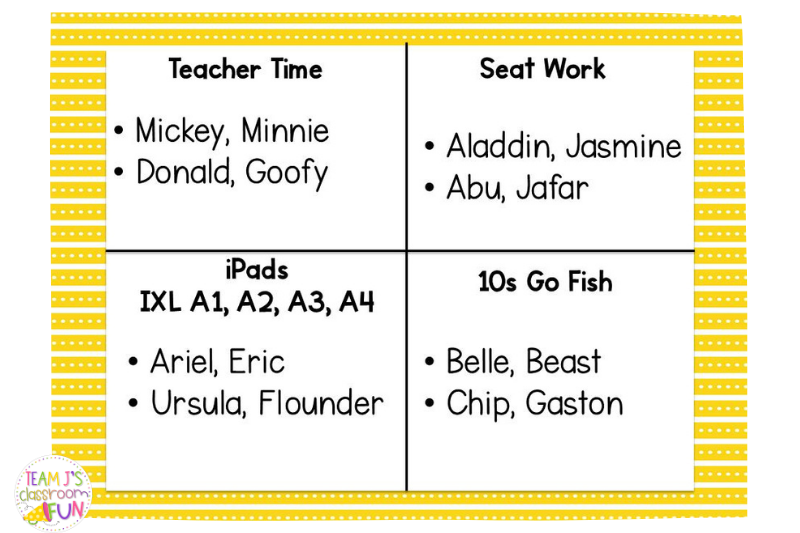
I use a math rotation management board displayed on our classroom TV. Each rotation is clearly listed along with partnerships and the activity students are completing.
Teacher Time and Seat Work are typically guided by an adult, so those stations do not require as much information. Students can easily see what they are doing during Tech Time and which game or activity they are completing during Game Time.
Students always rotate clockwise and follow the same rotation order each day. Keeping the routine consistent helps students become independent and confident with the process.
Where do you find math games and activities?
There are so many places to find math games and activities!
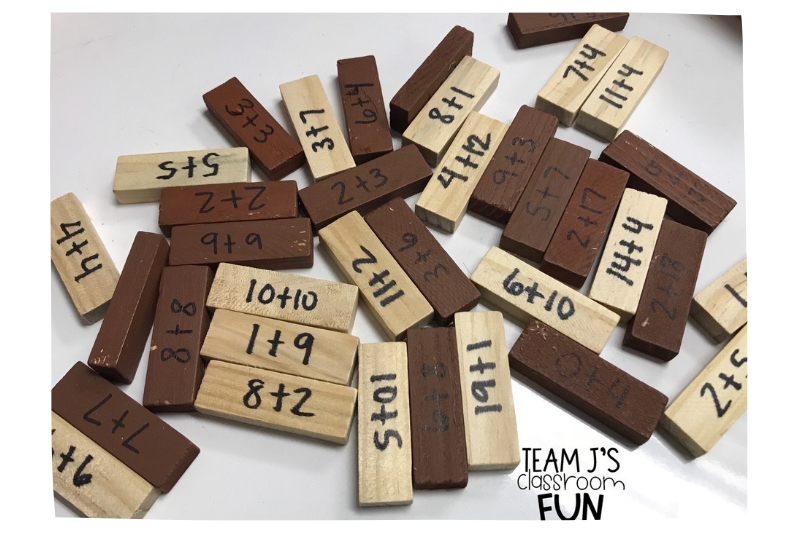
Many math curriculums include games that can be reused throughout the year as spiral review. I also find great activities on Teachers Pay Teachers and through other teacher-created resources.
The key is finding activities that allow students to practice important skills while staying engaged.
You can read more about my favorite places to find math games and activities in this blog post HERE.
How do you make sure students are actually working when you are pulling a small group?
This is one of the biggest concerns teachers have when starting math rotations—and it is completely understandable!
Strong expectations and routines are what make math rotations successful. During the first week or two, I do not immediately start pulling small groups. Instead, I focus on teaching students how the rotations work.
We start with two rotations, then move to three, and eventually add all four. During this time, I spend a lot of time monitoring, reteaching expectations, praising students who are following routines, and making sure everyone understands what they should be doing.
Once students are ready, I begin pulling small groups.
Students know that their work matters. They are expected to complete and turn in assignments, and I check their work regularly. If students choose not to stay on task, they are responsible for finishing their work during another time.
Even after rotations are established, I continue to circulate and provide reminders when needed. Building independence takes time, but the payoff is students who can confidently work while I provide targeted small group instruction.
Math Rotations FREEBIE

Math Rotations can seem a little overwhelming at first especially when you are trying to differentiated to meet the needs of all of your students. To help make this easier, I’ve created this digital or printable planning sheet that you can use to plan out your whole rotation for the day – standards, mini-lesson, rotation activities, and differentiated small group activities. This is a FREEBIE that you can sign up for HERE. Happy math planning!
Want more info…
Math Rotations Seat Work for 3rd Grade Bundle
Math Rotations Videos on YouTube



No Comments