Browsing Tag

math rotations

Math Rotations FAQ: Answers to the Most Common Teacher Questions

Math
Math rotations blog header

Math rotations have been a game changer for my math instruction, and I have been using this structure in my classroom for about 10 years. Using math rotations makes it possible for me to provide small group math instruction and differentiate learning for all of my students every day.

That being said, math rotations do require planning, clear expectations, and strong classroom management. But once the routines are established, the benefits far outweigh the work it takes to get started!

What is the breakdown of your math block?

My math block is typically 60–70 minutes long.

I start each block with a 5–10 minute mini-lesson where I introduce the skill through a solve and share, discuss strategies, and review the rotations for the day.

The next 40–50 minutes are spent in math rotations. My rotations include:

The final 5–10 minutes are used for closing. This is when we share strategies, discuss student thinking, and reflect on what we noticed during the lesson.
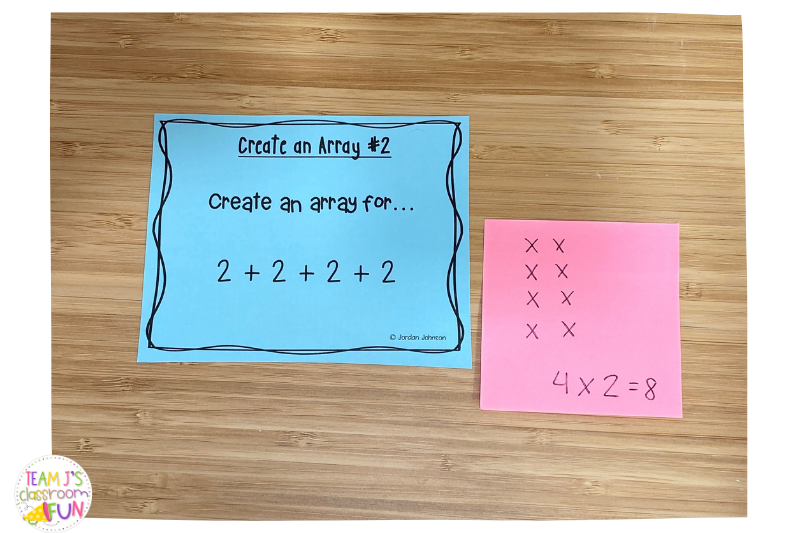
math activity

Do you have to plan four different groups each day?

Technically, yes, I plan for four different groups each day. However, all groups are working on the same math standard or skill.

For example, if we are working on finding area using unit squares, every group is practicing area—but the numbers, questions, and level of support are adjusted based on each group’s needs.

This is where the power of math rotations comes in! Instead of every student completing the exact same assignment, I can provide the right level of challenge and support for each group.
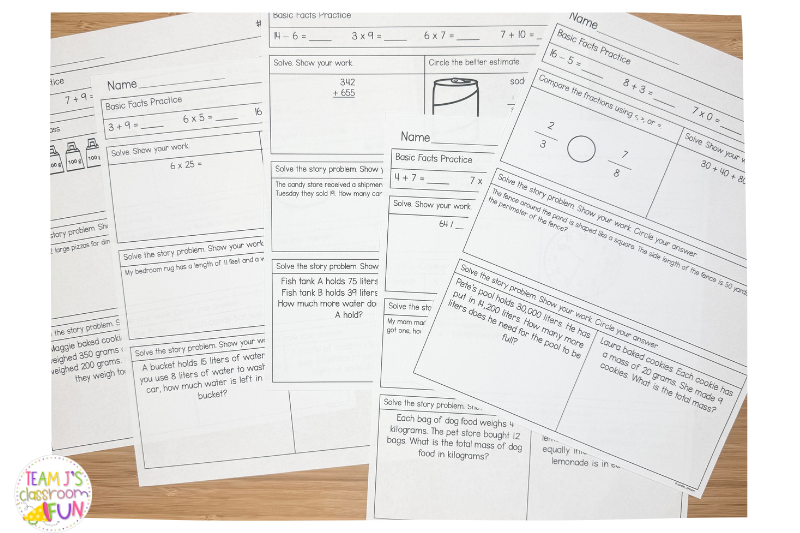
Math seat work

How do you separate your math groups?

I create my groups using a combination of:

  • Pre-tests
  • Benchmark assessments
  • Formative assessments
  • Observation during lessons

My groups are always flexible. I frequently move students during a unit if I notice they need additional support or are ready for more of a challenge.

The goal is not to create permanent groups—it is to create groups that help students get what they need at that moment.
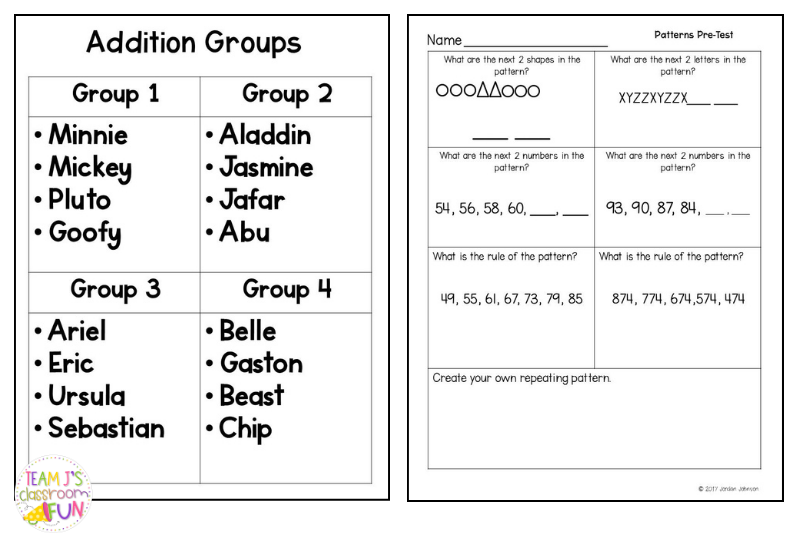
Math rotations groups and pre-test

How do students know where to go and what they are doing at each rotation?

A big part of successful math rotations is making sure students always know where they are going and what they are supposed to be doing.

I use a math rotation management board displayed on our classroom TV. Each rotation is clearly listed along with partnerships and the activity students are completing.

Teacher Time and Seat Work are typically guided by an adult, so those stations do not require as much information. Students can easily see what they are doing during Tech Time and which game or activity they are completing during Game Time.

Students always rotate clockwise and follow the same rotation order each day. Keeping the routine consistent helps students become independent and confident with the process.
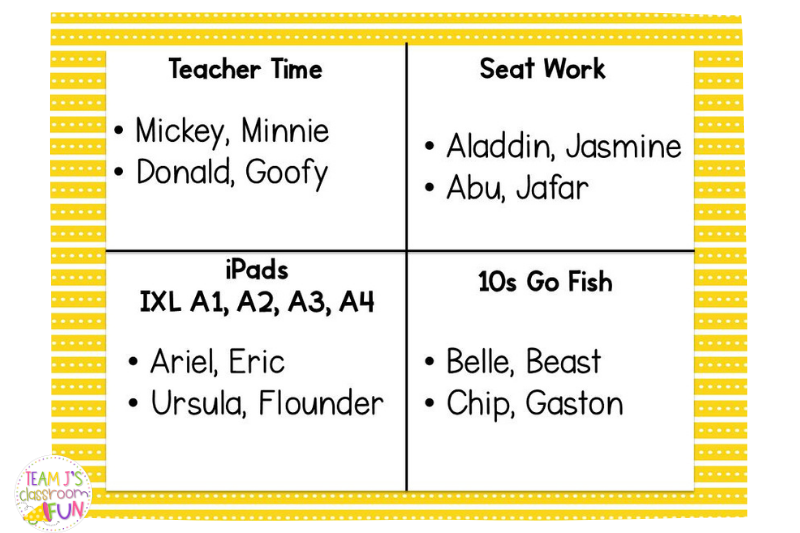
Math rotation board

Where do you find math games and activities?

There are so many places to find math games and activities!

Many math curriculums include games that can be reused throughout the year as spiral review. I also find great activities on Teachers Pay Teachers and through other teacher-created resources.

The key is finding activities that allow students to practice important skills while staying engaged.

You can read more about my favorite places to find math games and activities in this blog post HERE.
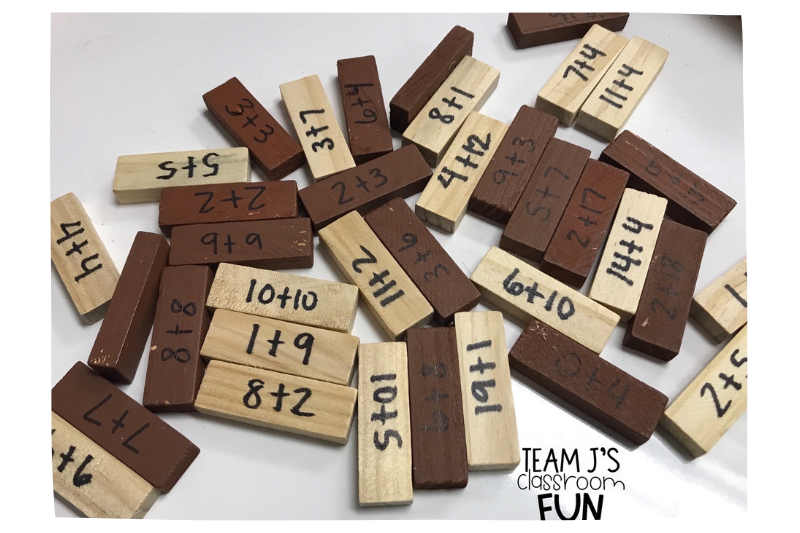
math fact games

How do you make sure students are actually working when you are pulling a small group?

This is one of the biggest concerns teachers have when starting math rotations—and it is completely understandable!

Strong expectations and routines are what make math rotations successful. During the first week or two, I do not immediately start pulling small groups. Instead, I focus on teaching students how the rotations work.

We start with two rotations, then move to three, and eventually add all four. During this time, I spend a lot of time monitoring, reteaching expectations, praising students who are following routines, and making sure everyone understands what they should be doing.

Once students are ready, I begin pulling small groups.

Students know that their work matters. They are expected to complete and turn in assignments, and I check their work regularly. If students choose not to stay on task, they are responsible for finishing their work during another time.

Even after rotations are established, I continue to circulate and provide reminders when needed. Building independence takes time, but the payoff is students who can confidently work while I provide targeted small group instruction.
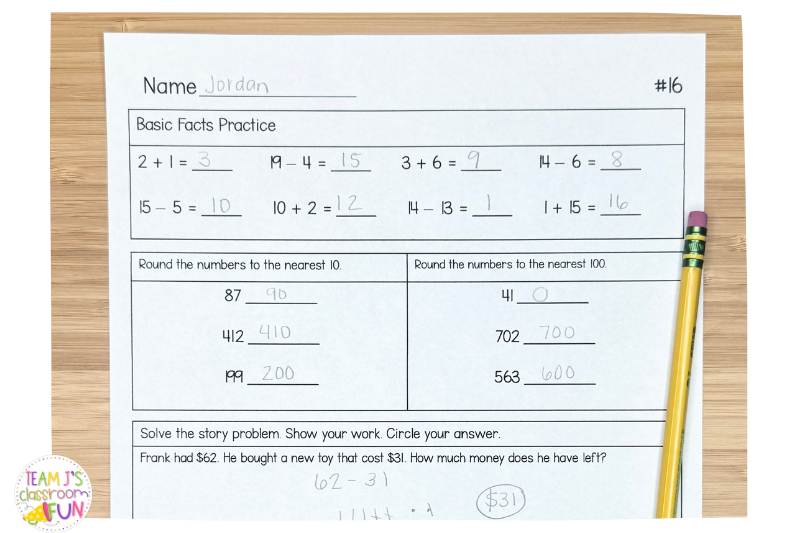
Math seat work

Math Rotations FREEBIE

Math planning page

Math Rotations can seem a little overwhelming at first especially when you are trying to differentiated to meet the needs of all of your students. To help make this easier, I’ve created this digital or printable planning sheet that you can use to plan out your whole rotation for the day – standards, mini-lesson, rotation activities, and differentiated small group activities. This is a FREEBIE that you can sign up for HERE. Happy math planning!

Want more info…

Math Rotations Round-Up Blog

Math Rotations Seat Work for 3rd Grade Bundle

Math Rotations Videos on YouTube

The Simple Math Rotations Schedule That Actually Works in a Real Classroom

Math, Math Stations

Teachers often hear about math rotations and think, I’d love to try that… but how?

Math rotations can feel overwhelming. You have to plan multiple rotations, manage behavior, and somehow find time to prep everything. It’s easy to feel like it’s just too much.

But it doesn’t have to be that hard. Today I’m sharing the simple math rotations schedule I’ve used in my 2nd and 3rd grade classrooms for the last 15 years.

Math rotations blog intro image

Why Math Rotations Don’t Work (At First)

I’ve seen the same situations over and over:

  • Teachers try math rotations once → it feels chaotic → they give up
  • Too many activities are planned → students get confused → behavior increases
  • There’s no consistent structure → students don’t know where to go or what to do
  • Rotations are too short or too long → students either rush or lose focus

The problem usually isn’t math rotations. It’s that the schedule is too complicated to maintain.


My Simple and Realistic Math Rotation Schedule

The biggest reason this works is consistency. I use the same 4 rotations every day so students always know what to expect.

Rotation 1: Teacher Time

Students come to the small-group table to work on the skill of the day.

Everyone is learning the same skill, but this is where I can differentiate the most and support struggling students.

Photo of small group activity during math rotations for line plots

Rotation 2: Seat Work

Students independently practice the skill of the day while also completing problems that include spiral review.

This keeps skills fresh without needing extra lessons or extra planning.

Photo of seat work

Rotation 3: Math Game

Students play a partner or small-group game.

I don’t introduce new games every day. Instead, I rotate through a few games we already know how to play. This saves planning time and keeps behavior problems low because students already know what to do.


Rotation 4: Tech Time

Students use their computers to practice math skills.

Because this rotation stays the same, students know how to log in, what to do, and how to complete the activity. The predictability makes a huge difference.


What This Looks Like in a 60-Minute Math Block

photo of management board

Here’s the timing I use in my classroom:

  • Mini-lesson → 5 minutes
  • Explain rotations → 3 minutes
  • Rotation 1 → 10–12 minutes
  • Rotation 2 → 10–12 minutes
  • Rotation 3 → 10–12 minutes
  • Rotation 4 → 10–12 minutes
  • Closing/share time → 5 minutes

The key is balance. Too short and students can’t get started. Too long and they lose focus.


Why This Schedule Works

This routine works because it’s predictable and easy to maintain.

Students know:

  • where to go
  • what to do
  • how long they have
  • what happens next

For me, it makes planning much easier because I’m not creating something new every day. I’m just plugging in a new math skill into the same routine.


How to Start Without Feeling Overwhelmed

If math rotations feel intimidating, start small.

  • Start with 2 rotations for a few days
  • Then move to 3 rotations
  • Finally move to 4 rotations

At the beginning, don’t pull small groups yet. Use that time to walk around, reinforce expectations, and make sure students understand the routine. After a few days, you’ll be able to confidently pull groups because students will know exactly what to do.


Want Help Planning Your Rotations?

I created a free Math Rotation Planning Page to make getting started easier.

free math rotations planning template

It helps you:

  • plan each rotation
  • map out your lesson from start to finish
  • plan how you’ll differentiate during teacher time

Click here to grab the free planning page and make math rotations easier to start this week.

More Math Rotations Info:

Watch My YouTube Series About How to Start Math Rotations

Shop 3rd Grade Math Rotations Seat Work

Read Math Rotations Round-Up

How I Use Math Seat Work to Make 3rd Grade Math Routines Easy and Effective

Math

Math seat work didn’t start as a strategy—it started as a solution. I was watching my students struggle through workbook pages filled with confusing directions and way too many problems. The overwhelm was real, and I knew they weren’t getting the targeted practice they needed. I wanted something they could do independently—without tears or frustration—but that still built fluency, confidence, and real math skills. That’s when I created my own daily math seat work—and it completely changed how I structure math time in my classroom.

Photo of blog header of a teacher giving a student a high five

What is Math Seat Work

Photo of math seat work pages

Math seat work is the independent practice portion of our daily math rotations. In my classroom, students rotate through four stations each day: teacher time, seat work, games, and tech. After learning and practicing a new skill during teacher time, students move on to seat work—where they apply what they’ve just learned on their own. This independent work gives them a chance to build confidence and fluency, and it gives me valuable insight into how well they’re grasping each concept.

When Do I Use Math Seat Work

I use math seat work daily during the independent practice portion of our math block. Since my students rotate through four math stations, they complete their seat work right after teacher time—giving them an immediate opportunity to practice the skill we just worked on in small groups. Seat work is short and focused, usually taking just 10–12 minutes to complete. That’s the perfect amount of time for one page of targeted, standards-based practice.

Photo of students working with cubes

You could also use the math practice pages outside of rotations. It works great as morning work or a daily bell ringer to help students ease into the school day with meaningful math practice. Some teachers even use it as homework, since the pages are designed to be truly independent—making it easy for students to complete without parent help or reteaching.

How I Use Math Seat Work During Math Rotations

Photo of math seat work with folder and stapler

At the start of each week, I print the seat work pages and staple them into a 5-day packet for each student. The pages are designed to follow a natural progression—building on the week’s target skill while also weaving in spiral review of previously taught concepts. During the seat work rotation, students complete one page per day independently.

Afterward, I check their work and provide quick feedback. Depending on time, students either make corrections the same day or the next morning during our intervention block. This system helps me see who has a strong grasp on the current concepts and who might need additional support. It also allows me to adjust my small group instruction and create flexible groups based on real-time data—so I can meet students right where they are and guide them toward mastery.

Why Spiral Review is So Important

I used to feel like I had to constantly re-teach skills that we had already covered. Once I started using seat work that spiraled standards all year long, that changed.

Students retain skills better when they revisit them regularly—and I can catch misconceptions before they become habits. My math seat work pages include everything from multiplication and division to place value, fractions, and word problems. We’re constantly cycling back through the essentials.

photo of student working on math on white board

How I Differentiate Math Seat Work

For students who need extra support, I differentiate their seat work by highlighting only the problems they are responsible for that day. I make sure to include the most important new content along with one or two review problems, so they’re still practicing both current and foundational skills. By reducing the number of problems, students feel more confident and are less likely to become overwhelmed—while still getting meaningful, targeted practice.

The Resource I Use Every Day

photo of seat work with math manipulatives

I created my Year-Long 3rd Grade Math Seat Work because I couldn’t find exactly what I needed. I wanted something that offered:

✅ Daily spiral review across all major 3rd grade math standards
✅ Print-and-go pages with no extra prep
✅ A consistent structure students could navigate independently
✅ A mix of computation, word problems, and review—aligned to the standards

It quickly became a cornerstone of my math block. The best part? I never have to scramble for daily practice—it’s already prepped and ready to go.

If you’re looking for an easy, effective way to build math fluency and reinforce key skills all year long, this resource is ready for you!
👉 Grab an individual 30-day set or save 20% with the full 180-day bundle using the links below.

Want to try it out?

Photo of free week sample of math seat work

I’ve put together a free week sample so you can see how I use it and try it with your students!
Click HERE to try it out!

For more information on Math Rotations, check out the info below…

Math Rotations Round-Up

Math Rotations YouTube Series