
Does anyone else feel burned out trying to plan reading intervention groups?
We already spend so much time planning strong Tier 1 instruction — and now we’re expected to differentiate even further and target specific skills in small groups. Who has the time for all of that extra planning?
Add in the layers of training, programs, resources, and curriculum, and intervention planning can quickly start to feel overwhelming. It’s easy to believe we need complex systems to make it all work.
But when intervention becomes complicated, it becomes unsustainable.

A few years ago, I found myself in that exact place. I knew something had to change.
Using what I learned from my training in the LETRS program and Fundations intervention training — along with my own classroom experience — I created a simple structure for my phonics groups.
It’s simple.
It’s consistent.
And it targets the skills my students actually need.
The Importance of Predictable Routines
Intervention doesn’t require a brand-new activity every day to be effective.
In fact, consistent and predictable routines are what make intervention work.
When the structure stays the same:
- You know what to expect
- Your students know what to expect
And that predictability allows everyone to focus on the learning — not the logistics.
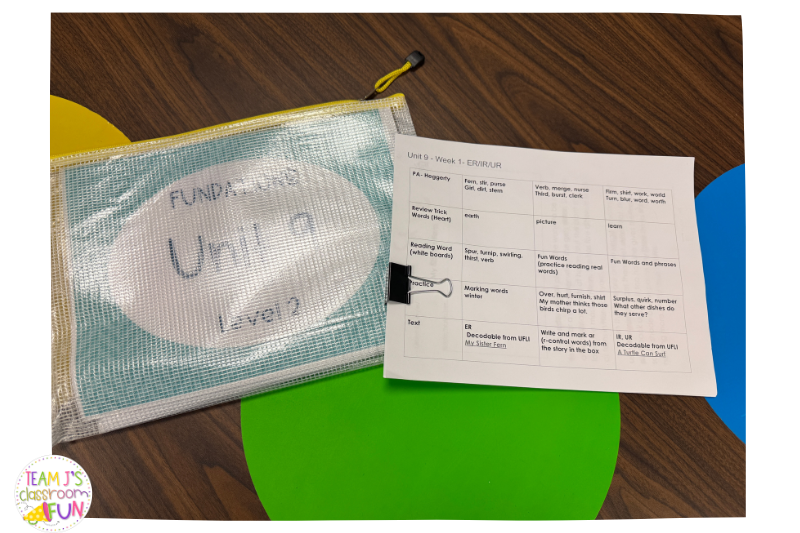
Each of my intervention lessons follows the same five-part routine:
- Phonemic Awareness
- Heart Words
- Decoding
- Spelling
- Reading Decodable Text
Because the structure stays consistent, I can easily apply any phonics skill within this framework.
Instead of spending hours planning new activities, I simply plug my target skill and focus words into my planning template.
Planning becomes faster.
Instruction stays targeted.
And students still get the repetition and practice they need.
Here’s How My Reading Intervention Groups Work

For students working on decoding, I keep intervention intentionally simple.
I meet with groups three times a week for about 20 minutes. Fridays are reserved for progress monitoring so I can stay focused on instruction during the week instead of constantly stopping to assess.
Instead of planning something new every day, I use the same predictable structure for each decoding session.

Here’s what that looks like:
1. Phonemic Awareness (2–3 minutes)
We start with quick blending or segmenting using words that match our phonics focus.
This short warm-up activates the exact skill students will need for the rest of the lesson — without adding extra planning or materials.
2. Heart Words (3–5 minutes)
We review one high-frequency word each day.
Students identify:
- What can be decoded
- What needs to be remembered
Keeping this routine consistent allows students to build automaticity without needing elaborate activities.
3. Reading Words (5–7 minutes)
Instead of multiple tasks, we stay anchored in our focus skill across the week.
Day 1: Introduce 3–4 focus words and break them down together
Day 2: Practice reading words for fluency
Day 3: Read words in short phrases or sentences
The structure stays the same — only the words change.
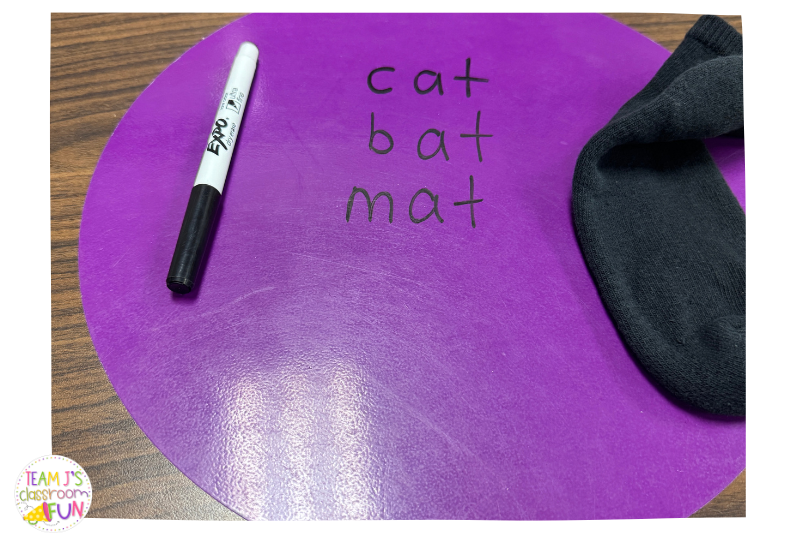
4. Spelling Practice (5 minutes)
Students spell 3–5 focus words using whiteboards or paper.
We tap out each word before spelling to reinforce sound-symbol connection.
Later in the week, we may add a simple sentence to connect spelling to writing.
5. Apply to Text (5 minutes)
We end by applying the skill in a short decodable text.
The goal isn’t to introduce something new — it’s to give students another opportunity to practice the same skill in context.
Try It Out
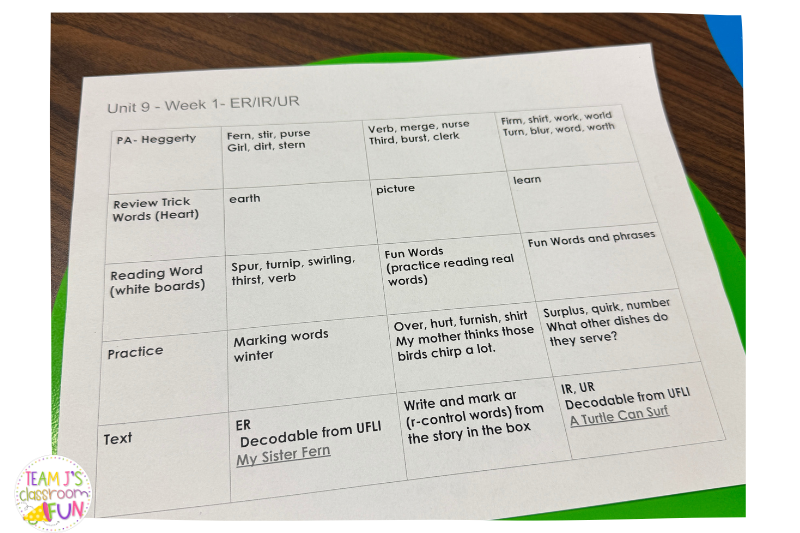
Grab my FREE reading intervention template to save time and create intervention plans that are easy to follow and provide intentional practice for your students. Click HERE for the FREEBIE.
More Intervention Assistance
Reading Intervention Groups In Action
How To Track Reading Intervention Success

No Comments