Browsing Tag

small groups

How to Simplify Reading Intervention Groups (Without Losing Rigor)

Phonics, Reading

Does anyone else feel burned out trying to plan reading intervention groups?

We already spend so much time planning strong Tier 1 instruction — and now we’re expected to differentiate even further and target specific skills in small groups. Who has the time for all of that extra planning?

Add in the layers of training, programs, resources, and curriculum, and intervention planning can quickly start to feel overwhelming. It’s easy to believe we need complex systems to make it all work.

But when intervention becomes complicated, it becomes unsustainable.

Reading Intervention Groups Blog image

A few years ago, I found myself in that exact place. I knew something had to change.

Using what I learned from my training in the LETRS program and Fundations intervention training — along with my own classroom experience — I created a simple structure for my phonics groups.

It’s simple.
It’s consistent.
And it targets the skills my students actually need.

The Importance of Predictable Routines

Intervention doesn’t require a brand-new activity every day to be effective.

In fact, consistent and predictable routines are what make intervention work.

When the structure stays the same:

  • You know what to expect
  • Your students know what to expect

And that predictability allows everyone to focus on the learning — not the logistics.
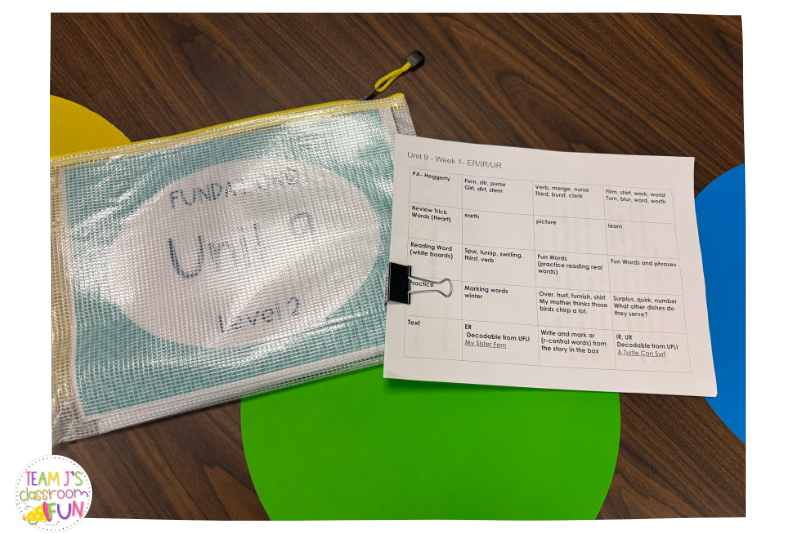
Image of planning page with practice pages

Each of my intervention lessons follows the same five-part routine:

  • Phonemic Awareness
  • Heart Words
  • Decoding
  • Spelling
  • Reading Decodable Text

Because the structure stays consistent, I can easily apply any phonics skill within this framework.

Instead of spending hours planning new activities, I simply plug my target skill and focus words into my planning template.

Planning becomes faster.
Instruction stays targeted.
And students still get the repetition and practice they need.

Here’s How My Reading Intervention Groups Work

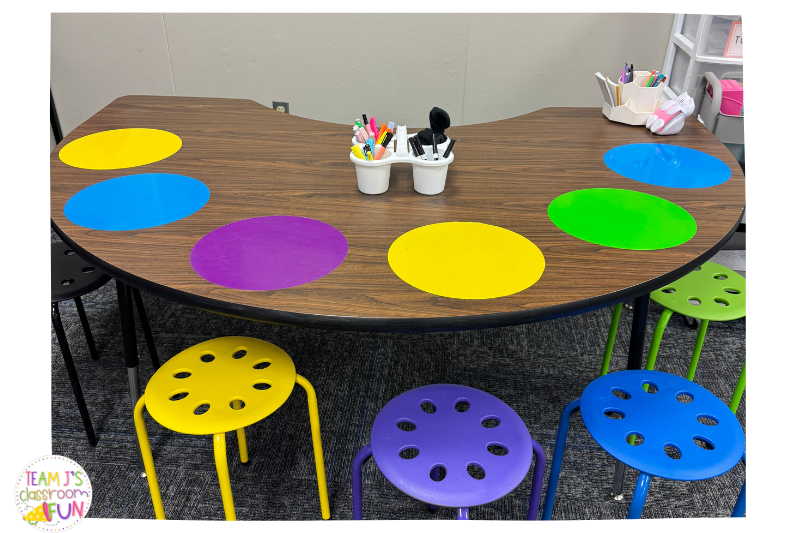
Picture of reading intervention group table

For students working on decoding, I keep intervention intentionally simple.

I meet with groups three times a week for about 20 minutes. Fridays are reserved for progress monitoring so I can stay focused on instruction during the week instead of constantly stopping to assess.

Instead of planning something new every day, I use the same predictable structure for each decoding session.

Teacher working with students

Here’s what that looks like:


1. Phonemic Awareness (2–3 minutes)

We start with quick blending or segmenting using words that match our phonics focus.

This short warm-up activates the exact skill students will need for the rest of the lesson — without adding extra planning or materials.


2. Heart Words (3–5 minutes)

We review one high-frequency word each day.

Students identify:

  • What can be decoded
  • What needs to be remembered

Keeping this routine consistent allows students to build automaticity without needing elaborate activities.


3. Reading Words (5–7 minutes)

Instead of multiple tasks, we stay anchored in our focus skill across the week.

Day 1: Introduce 3–4 focus words and break them down together
Day 2: Practice reading words for fluency
Day 3: Read words in short phrases or sentences

The structure stays the same — only the words change.


4. Spelling Practice (5 minutes)

Students spell 3–5 focus words using whiteboards or paper.

We tap out each word before spelling to reinforce sound-symbol connection.

Later in the week, we may add a simple sentence to connect spelling to writing.
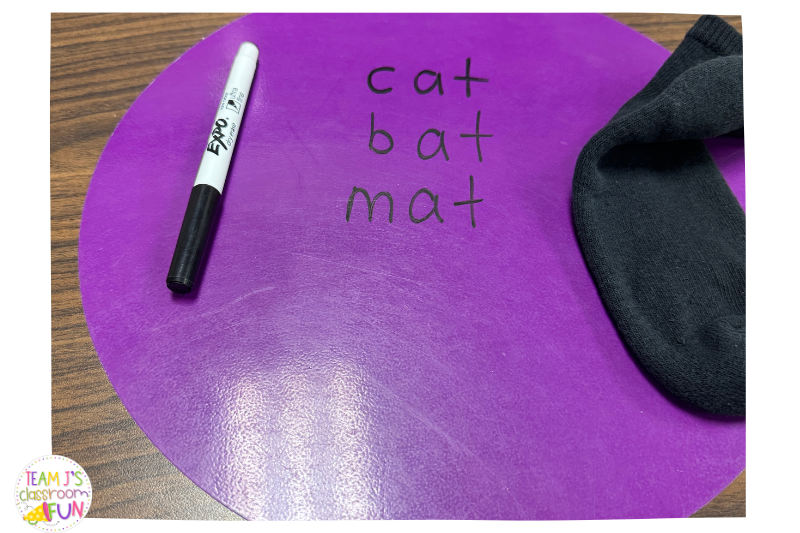
Example of spelling practice for reading intervention groups

5. Apply to Text (5 minutes)

We end by applying the skill in a short decodable text.

The goal isn’t to introduce something new — it’s to give students another opportunity to practice the same skill in context.

Try It Out
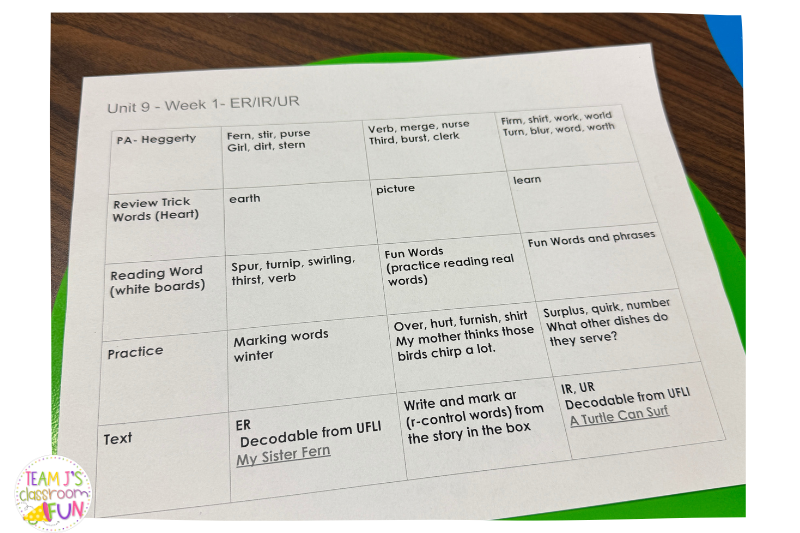
Free Reading Intervention Group Template Planning Page

Grab my FREE reading intervention template to save time and create intervention plans that are easy to follow and provide intentional practice for your students. Click HERE for the FREEBIE.

More Intervention Assistance

Progress Monitoring Probes

Reading Intervention Groups In Action

How To Track Reading Intervention Success
Reading Intervention Groups in Action: What I Do, Use, and Love

Reading

Reading intervention groups are a must in any elementary classroom—but how they look can vary depending on your students’ needs. After 19 years in the classroom, I can confidently say that the way I run my intervention groups has evolved a lot, especially as I’ve learned more about the Science of Reading.

My small groups now focus on the specific skills my students need most—whether that’s decoding, fluency, or comprehension—so they can grow into confident, capable readers.

In this post, I’m giving you a peek behind the scenes of how I plan, run, and track progress in my reading intervention groups for decoding skills. Plus, there’s a FREEBIE waiting for you at the end to help you get started!

Picture of teacher working with reading intervention groups

Reading Intervention Groups Set-Up

How you set up your groups may depend on your school’s curriculum and assessments. In my classroom, I use a mix of Fundations, UFLI, Heggerty, and what I’ve learned from LETRS training to guide my small group instruction.

Pictures of Fundations and UFLI manuals

To figure out what each student needs, I rely on several assessments. Our district uses FastBridge for benchmarking, and I also use spelling inventories, fluency passages, and the Quick Phonics Screener (especially if decoding is a concern). These tools help me pinpoint the specific phonics, fluency, or comprehension skills each student needs to grow.

Picture of Quick Phonics Screener and spelling inventory assessments

Reading Intervention Group Plan

Picture of reading intervention groups plan and pages to use in a bag

For students working on decoding, I run small groups three times a week for about 20 minutes. Fridays are set aside for progress monitoring, and on other days I pull groups for fluency or comprehension.

Here’s a simple breakdown of what a decoding-focused session looks like:

1. Phonemic Awareness (2–3 minutes)

Quick practice blending and segmenting 5–10 words that match our phonics focus. This is fast-paced and gets students’ brains warmed up.

2. Trick Words / Heart Words (3–5 minutes)

We review one tricky/high-frequency word per day—talking about which parts we can decode and which parts we need to “know by heart.”

3. Reading Words (5–7 minutes)

  • Day 1: I introduce 3–4 focus words and we break them down together (sound-spellings, syllables, etc.).
  • Day 2: Students read from the Fundations word list—taking turns leading rows.
  • Day 3: We use the Fundations phrase sheet to practice reading in context.
Pictures of fundations pages for reading groups

4. Spelling Practice (5 minutes)

Students spell 3–5 focus words using whiteboards or paper. We tap out each word, then spell. On Days 2 and 3, we add one sentence to work on writing mechanics too.

Picture of spelling practice for intervention groups

5. Apply to Text (5 minutes)

We wrap up by reading a short decodable text that matches our phonics skill. I rotate between:

This structure keeps our lessons focused and consistent, while giving students plenty of practice across multiple formats.

Must-Have Supplies for Reading Intervention Groups

Having the right tools on hand makes small group time run so much smoother! Here are some of my go-to supplies for reading intervention—and they’re all easy to grab and use daily.
(Click the links to check them out for your own classroom!)

Please note Amazon affiliate links are included in this post for your convenience.  As an Amazon Associate, I earn from qualifying purchases.

Picture of caddy for supplies
  • Fluency phones – Perfect for helping students hear themselves as they read.
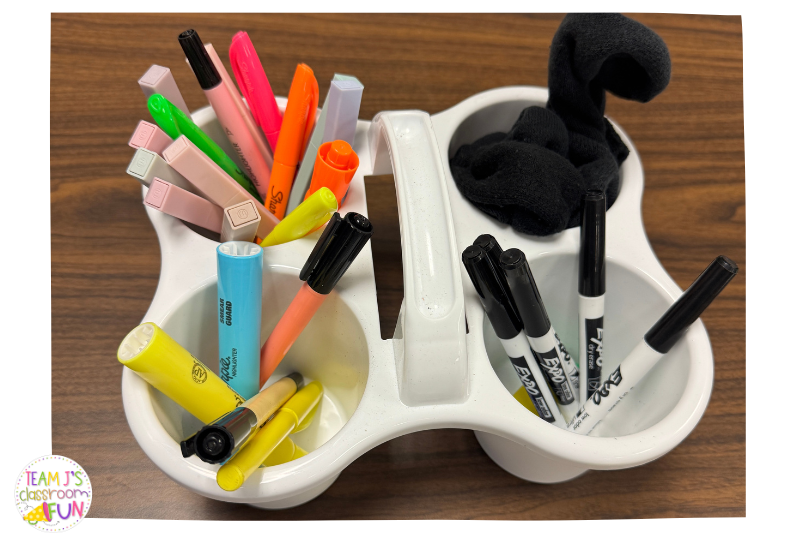
  • Caddy or bin – I use this to keep pencils, highlighters, and whiteboard markers organized and ready to go.
  • Individual whiteboards – Great for spelling, tapping out words, and quick responses.
  • Whiteboard adhesive spots – Stick these right on the table for each student’s personal work space!
  • Storage bags or folders – I keep each group’s materials (books, word lists, etc.) in their own labeled bag so we’re ready to dive in quickly.

How Do I Know My Reading Intervention Is Working?

As teachers, we always want to make sure our interventions are actually helping students grow. If something isn’t working, we need to catch it early so we can adjust our instruction and better meet their needs.

One of my biggest frustrations was that most progress monitoring tools for decoding only focus on CVC short vowel words. While that’s an important skill, many of my students are working on other phonics patterns, and there just weren’t great tools out there to track their progress.

So—I made my own!

Photo of progress monitoring probes for reading intervention groups


I created a set of phonics-based progress monitoring probes that target specific skills. Each set includes real words, nonsense words, and mixed word lists so you can get a clear picture of how students are doing.

If you’re looking for a simple way to monitor growth across a variety of phonics skills, you can check out this resource HERE in my TPT store!

Freebie to Help You Plan Your Reading Intervention Groups

Need a simple way to stay organized with your small groups? I’ve got you covered!
Click ABOVE to grab a FREE planning template for your reading intervention groups. It’s editable, so you can either type in your plans digitally or print it out and write by hand—whatever works best for you!

More Reading Ideas…