Browsing Tag

phonics

How to Simplify Reading Intervention Groups (Without Losing Rigor)

Phonics, Reading

Does anyone else feel burned out trying to plan reading intervention groups?

We already spend so much time planning strong Tier 1 instruction — and now we’re expected to differentiate even further and target specific skills in small groups. Who has the time for all of that extra planning?

Add in the layers of training, programs, resources, and curriculum, and intervention planning can quickly start to feel overwhelming. It’s easy to believe we need complex systems to make it all work.

But when intervention becomes complicated, it becomes unsustainable.

Reading Intervention Groups Blog image

A few years ago, I found myself in that exact place. I knew something had to change.

Using what I learned from my training in the LETRS program and Fundations intervention training — along with my own classroom experience — I created a simple structure for my phonics groups.

It’s simple.
It’s consistent.
And it targets the skills my students actually need.

The Importance of Predictable Routines

Intervention doesn’t require a brand-new activity every day to be effective.

In fact, consistent and predictable routines are what make intervention work.

When the structure stays the same:

  • You know what to expect
  • Your students know what to expect

And that predictability allows everyone to focus on the learning — not the logistics.
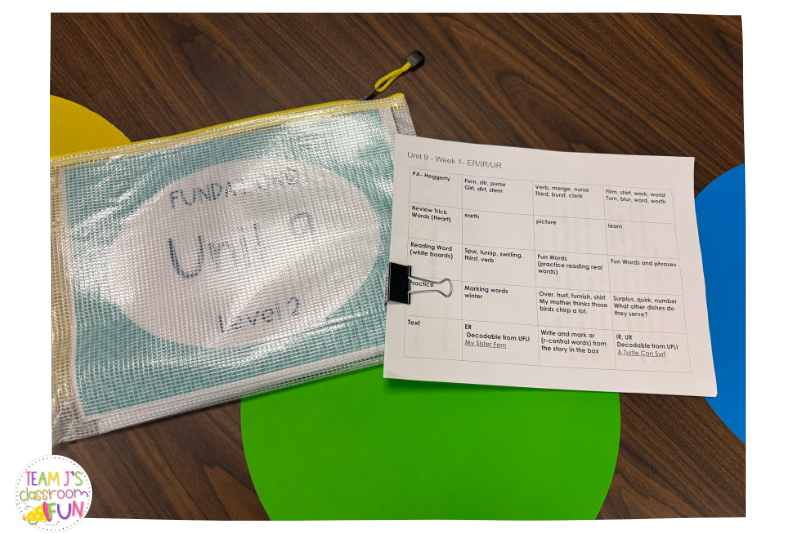
Image of planning page with practice pages

Each of my intervention lessons follows the same five-part routine:

  • Phonemic Awareness
  • Heart Words
  • Decoding
  • Spelling
  • Reading Decodable Text

Because the structure stays consistent, I can easily apply any phonics skill within this framework.

Instead of spending hours planning new activities, I simply plug my target skill and focus words into my planning template.

Planning becomes faster.
Instruction stays targeted.
And students still get the repetition and practice they need.

Here’s How My Reading Intervention Groups Work

Picture of reading intervention group table

For students working on decoding, I keep intervention intentionally simple.

I meet with groups three times a week for about 20 minutes. Fridays are reserved for progress monitoring so I can stay focused on instruction during the week instead of constantly stopping to assess.

Instead of planning something new every day, I use the same predictable structure for each decoding session.

Teacher working with students

Here’s what that looks like:


1. Phonemic Awareness (2–3 minutes)

We start with quick blending or segmenting using words that match our phonics focus.

This short warm-up activates the exact skill students will need for the rest of the lesson — without adding extra planning or materials.


2. Heart Words (3–5 minutes)

We review one high-frequency word each day.

Students identify:

  • What can be decoded
  • What needs to be remembered

Keeping this routine consistent allows students to build automaticity without needing elaborate activities.


3. Reading Words (5–7 minutes)

Instead of multiple tasks, we stay anchored in our focus skill across the week.

Day 1: Introduce 3–4 focus words and break them down together
Day 2: Practice reading words for fluency
Day 3: Read words in short phrases or sentences

The structure stays the same — only the words change.


4. Spelling Practice (5 minutes)

Students spell 3–5 focus words using whiteboards or paper.

We tap out each word before spelling to reinforce sound-symbol connection.

Later in the week, we may add a simple sentence to connect spelling to writing.
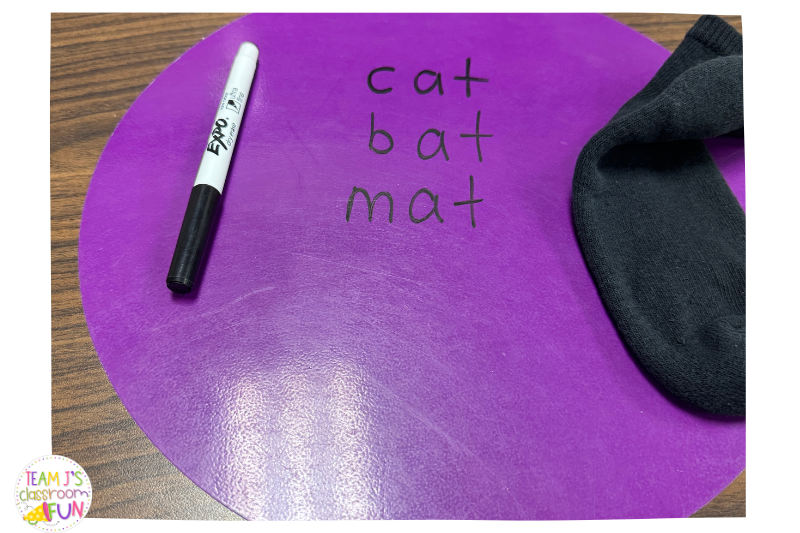
Example of spelling practice for reading intervention groups

5. Apply to Text (5 minutes)

We end by applying the skill in a short decodable text.

The goal isn’t to introduce something new — it’s to give students another opportunity to practice the same skill in context.

Try It Out
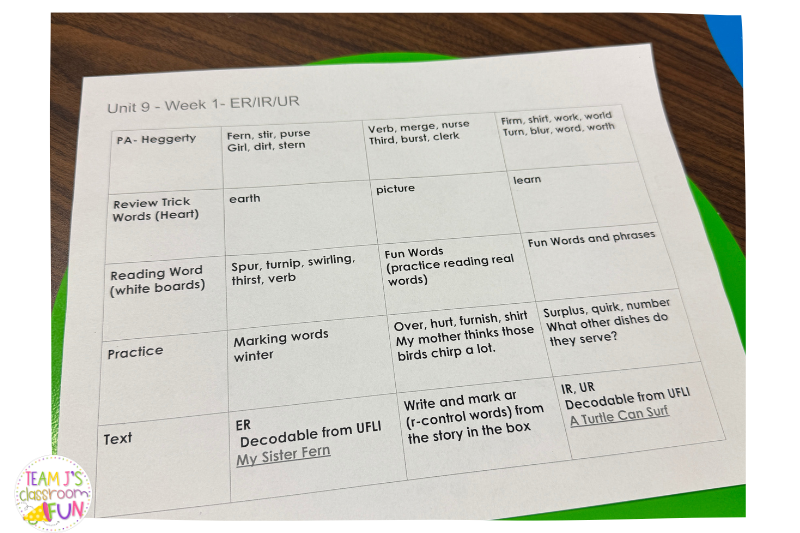
Free Reading Intervention Group Template Planning Page

Grab my FREE reading intervention template to save time and create intervention plans that are easy to follow and provide intentional practice for your students. Click HERE for the FREEBIE.

More Intervention Assistance

Progress Monitoring Probes

Reading Intervention Groups In Action

How To Track Reading Intervention Success

How to Track Reading Intervention Success with Simple Phonics Progress Monitoring

Reading
Blog header for phonics progress monitoring

You’ve been meeting with your reading intervention group every day for weeks, and you know phonics progress monitoring is the key to proving growth. You’ve modeled, practiced, and encouraged—but when you sit down at your next MTSS meeting, the big question pops up: “Is your intervention working?”

Many teachers feel the same frustration. You know your students are improving, but without clear data, it’s hard to prove growth or pinpoint where they’re still stuck. That’s where simple, consistent phonics progress monitoring becomes your best tool.

The Importance of Data in Reading Interventions

CVC Data for phonics progress monitoring

Collecting data isn’t just about paperwork—it’s about having a clear picture of what’s happening with your students’ reading growth. Data helps you:

  • Show progress at MTSS or RTI meetings
  • Communicate growth with parents in a concrete way
  • Adjust instruction quickly when students plateau
  • Celebrate wins with students, keeping them motivated

When you have reliable data, you can make instructional decisions with confidence instead of just guessing.

What Makes Phonics Progress Monitoring Effective?

Not all progress monitoring tools are created equal. The most effective ones:

  • Include a variety of word types (real and nonsense) so you can see if students are applying phonics skills rather than memorizing.
  • Cover multiple phonics patterns (CVC, digraphs, blends, long vowels, vowel teams, r-controlled vowels) to check mastery across different skills.

This balance allows you to pinpoint exactly where students are progressing—and where they still need support.

Blends phonics progress monitoring

Tips for Running Progress Monitoring

teacher reading with student

Progress monitoring doesn’t have to eat up your lesson time. Here are a few teacher-tested strategies:

  • Keep it short: 1–2 minutes per student is often all you need.
  • Use both timed and untimed options: Timed probes show fluency, while untimed show accuracy.
  • Let students graph their own data: A simple graphing page helps them visualize growth, keeps them motivated, and makes data easy to share at meetings.
  • Schedule it consistently: Choose a specific day each week (I progress monitor every Friday) so it becomes routine.

These small tweaks make progress monitoring feel doable instead of overwhelming.

Turn the Data into Action

Data is only powerful if you use it to guide your instruction. Here’s how:

  • If a student shows steady growth → continue with your current intervention.
  • If progress stalls → adjust your small group, try new strategies, or revisit prerequisite skills.
  • If a student shows mastery → celebrate success and move them on to more advanced skills.

This cycle of “teach, check, adjust” ensures every student keeps moving forward.

Why I Created My Own Progress Monitoring Probes

I struggled to find a progress monitoring tool that actually matched the phonics skills my students were learning. Most jumped from short vowels with CVC words straight into fluency passages. While that works for some, it didn’t give me the information I needed about whether my students were truly mastering the specific skills we were covering.

For example, if we were working on long vowels with silent e, testing short vowels or reading fluency passages didn’t tell me if students had mastered that pattern. That’s why I created my own set of progress monitoring probes—focused on individual phonics skills with real words, nonsense words, and a mix of both.

long vowel progress monitoring

A Teacher-Friendly Solution for Progress Monitoring

To take the stress out of data collection, I designed a Progress Monitoring resource that streamlines the entire process. It includes:

  • 6 probes each for CVC words, vowel teams, long vowels, digraphs, blends, and r-controlled vowels
  • Real, nonsense, and mixed word lists for each skill
  • Recording sheets (timed and untimed)
  • Student graphing pages for easy progress tracking

This gives you six full weeks of ready-to-use assessments that take minutes to administer. Teachers love using them for small groups, MTSS meetings, and parent conferences—because the data is clear, consistent, and stress-free.

Grab your progress monitoring probes already created below…

digraph phonics

For more reading intervention ideas, see these blog posts…